Listen to this guide

Five placements that give an honest outfit check in a New Zealand home — and one common spot that quietly ruins every reflection it touches. A dressing mirror is the one piece of glass in the house that has to tell you the truth before you walk out the door, and where you put it matters more than what shape it is. Get the placement right and a $200 round wall mirror over a vanity reads cleaner than a $900 floor piece in the wrong spot. Get it wrong and the most flattering mirror in the country still adds shadows under the jaw, flattens proportions and sends you back inside to change. This is the founder-voice playbook we hand to customers in Auckland, Wellington and Christchurch when they ask where the dressing mirror should go.
Key takeaways
- The honest viewing distance for a full-body outfit check is 1.5 to 2m — closer than that and proportions flatten.
- North-facing daylight beats overhead LEDs every time. Side light at face height beats anything pointing down at the head.
- For walk-in wardrobes, mount at the closed end-wall so the corridor itself becomes the viewing distance.
- Renters: under 12kg can hang on adhesive strips or picture-rail hooks. Over 12kg, lean a freestanding portrait — no drilling.
Why placement matters more than mirror choice
We have seen the same dressing mirror look completely different in two homes. A 200 x 100cm Aldren X in a south-facing Auckland bedroom with a single overhead LED reads cold and unflattering. The same mirror moved across the hallway into a north-facing room with morning daylight reads clean, true and one shade warmer. The mirror is unchanged. The placement did the entire job.
Three variables decide whether a dressing mirror works:
- Viewing distance. Full body needs 1.5 to 2m of clear floor in front. Face-and-chest (vanity) needs 50 to 80cm. Anything closer flattens proportion and forces the chin into the reflection.
- Light direction. Front-on daylight is the gold standard. Side light at face height is second best. Overhead light from directly above the mirror is the worst — it casts shadows under the eyes, jaw and chest.
- Sightline. The eye-level centre of the mirror should sit at 145 to 150cm from the floor for a wall mount, 110 to 115cm for a vanity. Hung too high, you tilt the head back. Hung too low, you stoop forward.
Each of the five spots below solves these three variables for a specific room. Pick the one that matches your floor plan, not the one that looks best on a moodboard.
Spot 1 — Bedroom corner vanity (north-facing daylight)
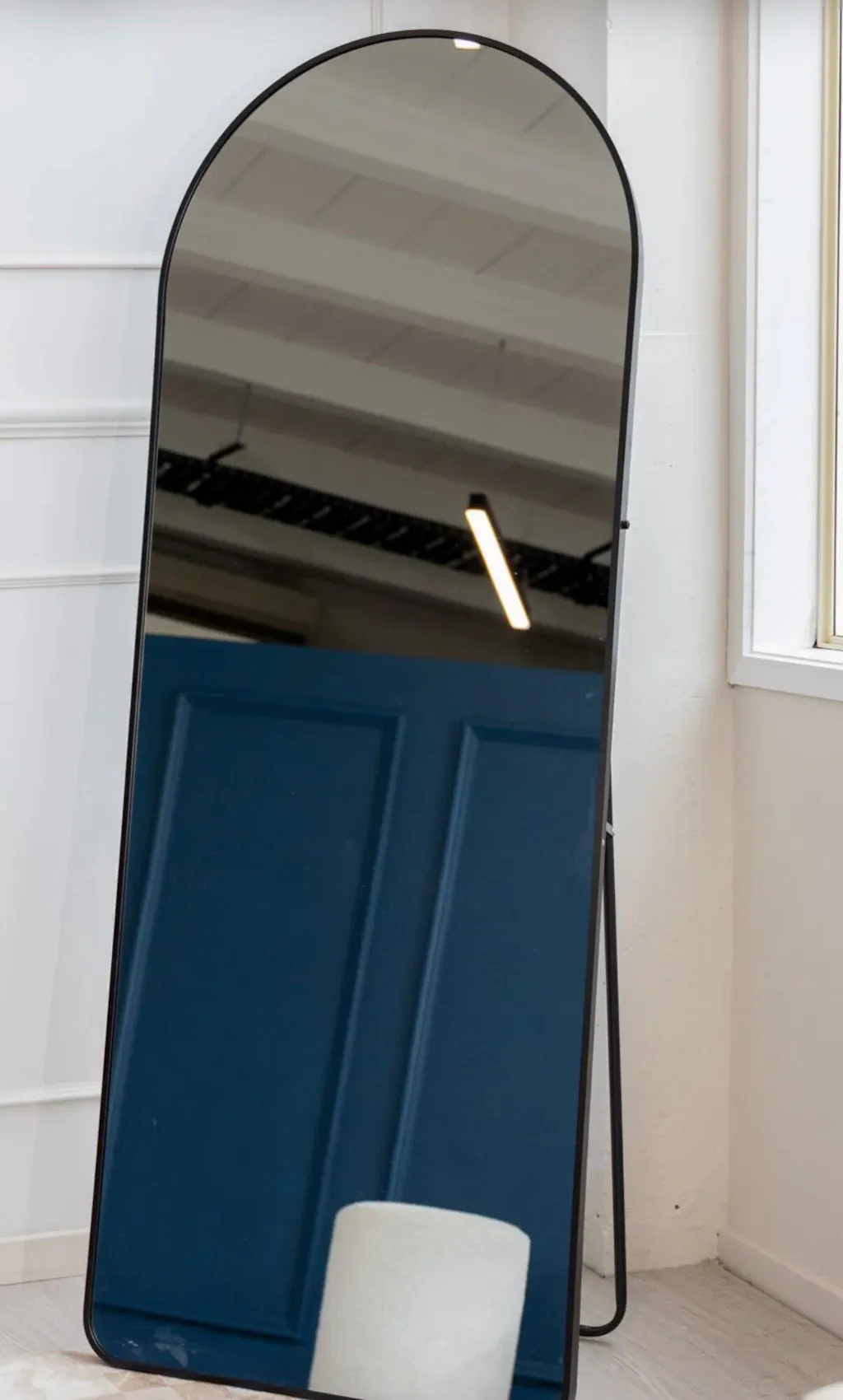
The most underused spot in a Kiwi bedroom is the corner between an exterior wall and a window. Place the dressing mirror flat against the longer wall in that corner, with the bottom edge 25 to 30cm above the floor and the centre at adult eye level. The window pours daylight onto the front of the body, the corner gives the mirror two perpendicular surfaces of natural light, and the floor space in front of the bed becomes the viewing zone — typically 1.7 to 2m, which is exactly the honest outfit-check distance.
The piece pictured here is a 220 x 120cm Lowen X. At 45kg it leans against the corner wall rather than wall-mounts, with felt feet and a small anti-tip strap to a skirting eye-screw — no plasterboard anchors needed. For renters and anyone who moves more than once every five years, leaning is the practical answer at this size and weight.
Why it works: the corner geometry catches morning light from two angles, the leaning posture lifts the bottom edge enough to see ankle break, and a 220cm height gives the head clearance most NZ 2.4m ceilings need.
Size for this spot: 180 to 220cm tall, 50 to 120cm wide. Anything shorter than 170cm cuts off the head or ankles for taller adults.

Lowen X Rectangular Full Length Mirror | 220 x 120cm
From $895.00$955.00 · 45.0kg · or 4 fortnightly Afterpay payments
Shop now →Spot 2 — Walk-in wardrobe end-wall

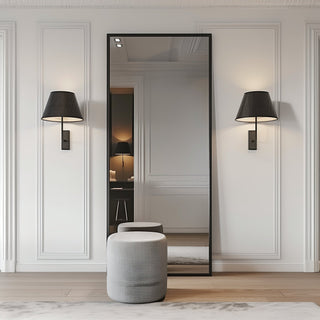
If you have a walk-in wardrobe, the dressing mirror belongs at the closed end of the corridor — never on a side wall. Mounting at the end-wall turns the entire length of the wardrobe into the viewing distance, which means a 2m walk-in gives you 2m of standback automatically. Pick what you are going to wear, take three steps back, see the full outfit. That is the entire workflow, and it is the only placement that uses the room's geometry instead of fighting it.
The Aldren X 200 x 100cm shown here at 28kg is a rectangular full length with a thin charcoal-grey metal frame. For a walk-in over 1.8m wide, this is the size that fills the end-wall without crowding it. For tighter walk-ins (1.4 to 1.8m wide), drop down to 180 x 50cm — the Nocturne portrait — so the mirror does not visually clip the side robe rails.
Hardware for 28kg in 10mm Gib: a French cleat that catches at least one stud, plus a single Snaptoggle anchor on the second mounting point. Wardrobes are often built into corner cavities with metal-stud framing rather than timber, so a magnet-only stud finder is the reliable check before drilling. If the framing is metal, use a self-drilling toggle rated to 25kg+ on each anchor point — never plastic plug anchors.
Why it works: the corridor delivers the viewing distance for free, the end-wall is usually the only unbroken vertical surface in a walk-in, and overhead pendant or strip lights inside the wardrobe usually bounce off the mirror to brighten the whole space.

Aldren X Rectangular Full Length Mirror | 200 x 100cm
From $485.00$595.00 · 28.0kg · or 4 fortnightly Afterpay payments
Shop now →Spot 3 — Bedroom dressing-table vanity (face-and-chest)

Not every dressing setup needs a full length mirror. For makeup application, hair, jewellery and skincare, the right tool is a circular or rectangular wall mirror at face-and-chest size, mounted above a dressing table. The seated viewing distance is 50 to 80cm, which is too close for a full-body sightline anyway — and at that distance, a 100cm round mirror like the Aure Round 100 x 100cm reads the face plus collarbone clearly without forcing the user to lean back.
Mount the mirror with the bottom edge 25 to 30cm above the table surface and the centre at seated eye level (around 110 to 115cm from the floor for an 80cm-high dressing table with a chair seat at 45cm). The 12kg Aure Round needs two M5 toggle anchors rated to 25kg+ each — no stud-finding necessary on plasterboard alone.
Light direction is the make-or-break choice for this spot. The honest answer is to put a single warm-white desk lamp on the table itself at face height, pointing toward the mirror, and skip the overhead downlight entirely. That is the lighting setup professional makeup artists use because it eliminates shadows under the eyes and jaw — exactly the shadows that make people complain their dressing mirror is unflattering. CIE 90+ CRI bulbs at 3,000K give the closest match to north-facing daylight on skin tone.
Why it works: face-and-chest framing matches the actual task (makeup, hair, jewellery — none of which need a full-body view), the wall mount keeps the table surface clear, and a 100cm round shape softens square bedroom architecture without dominating the wall.

Aure Round Wall Mirror | 100 x 100cm
From $195.00$355.00 · 12.0kg · or 4 fortnightly Afterpay payments
Shop now →Spot 4 — Renter-friendly bedside dressing nook (no-drill)

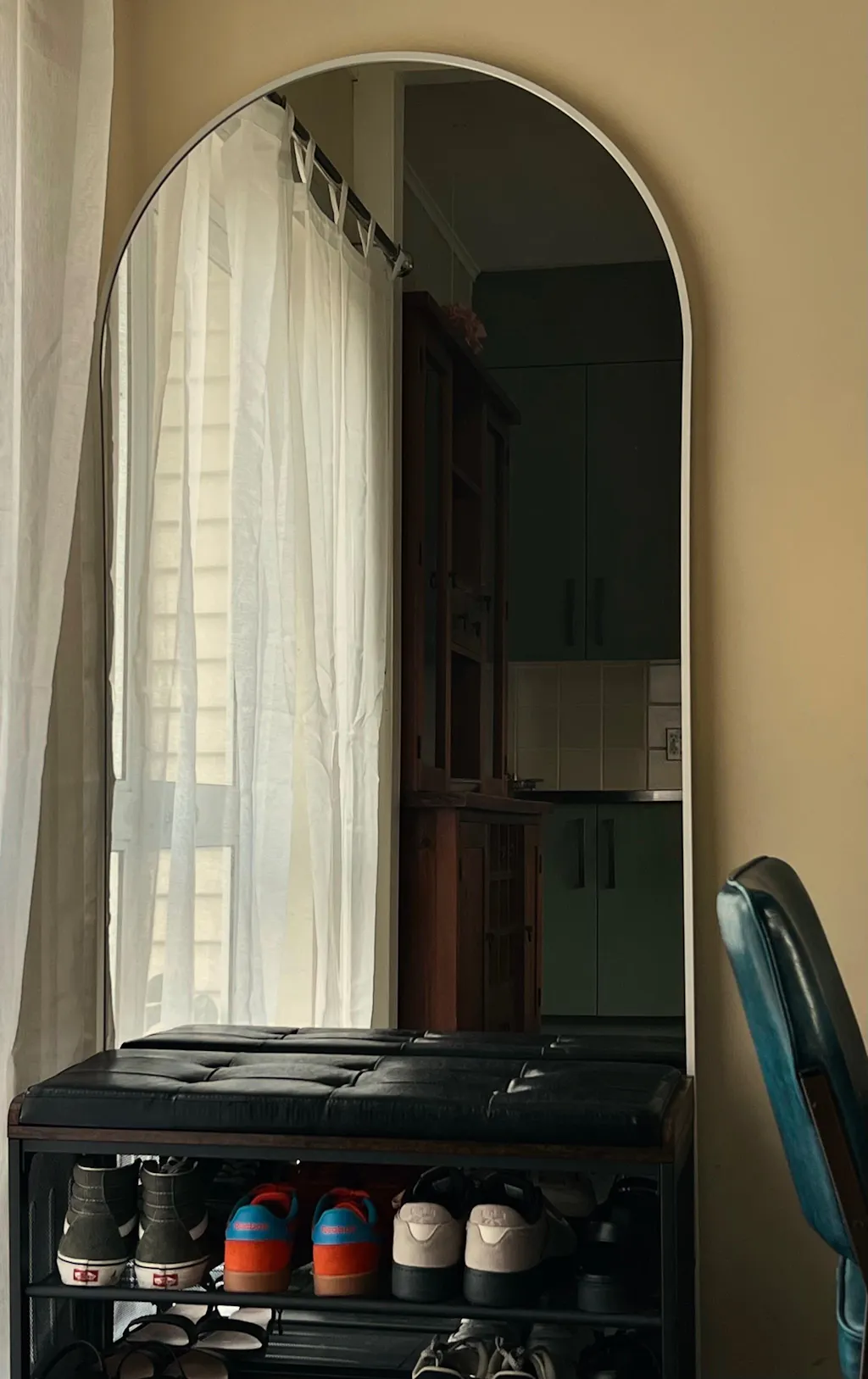
Rentals are the hardest dressing-mirror brief because the renter cannot drill into walls, the rooms are usually under 14sqm, and the lease is short enough that committing to a wall position feels expensive. The fix is the no-drill bedside nook — a 100 to 120cm arched window-style mirror mounted on heavy-duty adhesive strips on the wall opposite the bed, with a narrow side table beneath it.
The Le Vue Window 120 x 100cm pictured here is 11kg — well under the 12kg threshold where no-drill adhesive strips stop being safe. Four heavy-duty adhesive strips (rated to 7.2kg each, available at any hardware store) hold the mirror through several seasons of NZ humidity if applied to a clean, dry, painted plasterboard wall. Picture-rail hooks work for any villa or pre-1940s flat with the original timber rails still intact — those rails are rated to take genuine weight, unlike the modern decorative cornicing they are sometimes confused with. Read our no-drill mirror mounting NZ guide for the full breakdown of rental-safe mounting options.
For anything heavier than 12kg, the renter answer flips to leaning a freestanding portrait. A 180 x 50cm portrait at around 13 to 19kg leans against the wall with felt feet and an anti-tip strap to a skirting eye-screw — no holes drilled, no adhesive residue, no end-of-tenancy disputes.
Why it works: bedside placement uses the wall opposite the bed, which is usually the longest unbroken surface in a small rental room. The arched top of a window-style mirror reads softer than a hard rectangle in compact spaces, and 120cm of height clears the bedside table comfortably without stealing visual oxygen from the rest of the room.

Le Vue Window Wall Mirror | 120 x 100cm
From $299.00$399.00 · 11.0kg · or 4 fortnightly Afterpay payments
Shop now →Spot 5 — Spare-room dressing room (full-wall outfit zone)
The fifth spot is the one most NZ homes inherit accidentally — a spare bedroom slowly turning into a dressing room. If you have a 9 to 12sqm spare room with no bed, the right move is to commit: floor-to-ceiling clothes rails along one wall, a 200 x 100cm landscape full length on the opposite wall, a single bench in the middle. The bench gives the seated outfit-check (shoes on, shoes off, jacket choice) and the wall mounted mirror sits at the standing distance.
An Aldren X 200 x 100cm in landscape orientation is the workhorse for this format because the wider profile shows two outfit choices side by side — useful when you are deciding between two dresses or two jackets. For taller adults, mount the centre at 150cm. For mostly-seated use (jewellery selection, shoe trying), drop the centre to 130cm so the seated reflection lands at sternum height.
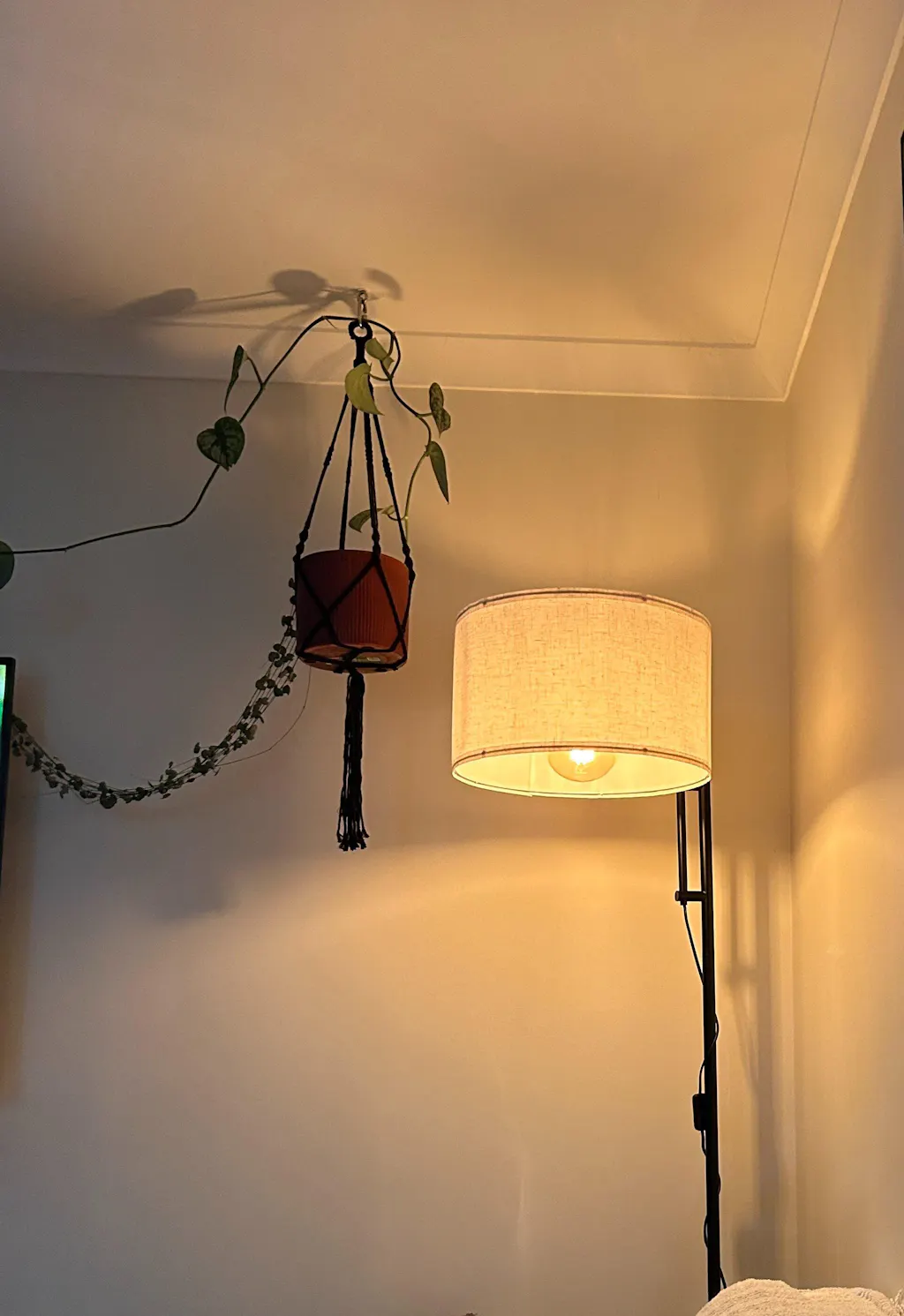
This spot has the same logic as a walk-in wardrobe end-wall but with the corridor turned into a room — more floor space, more mirror options, more room to step back. North-facing daylight from a single window is the lighting target. If the spare room is south-facing, a single warm-white standing lamp in the corner replicates the same direction-of-light logic.
Why it works: dedicated rooms are the rare case where you control both the viewing distance and the light source. Use both deliberately and the spare-room dressing zone reads more honestly than any commercial fitting room.
The spot to avoid — directly opposite the wardrobe doors
Two warnings worth a paragraph each.
Do not hang a dressing mirror directly opposite an open wardrobe. The reflection doubles the visual clutter — you see the mirror, then the contents of the wardrobe, then the mirror's reflection of the contents. Even tidy wardrobes look chaotic in this configuration, and the room reads smaller because the eye cannot find a resting point. The fix is to angle the mirror onto an adjacent wall, or move the wardrobe so the doors face a blank wall instead.
Do not put a dressing mirror under a single overhead downlight. Overhead light from directly above the mirror casts shadows under the eyes, jaw and chest — the same shadows that make hotel-bathroom mirrors notoriously unflattering. The fix is one of two: replace the overhead downlight with a side wall sconce at face height, or simply turn the overhead off and use daylight or a side desk lamp instead. People rarely complain about a dressing mirror in a room with no overhead spotlight.
Two NZ-specific notes
Earthquake anchoring. Any wall mirror over 25kg or any leaning mirror taller than the user benefits from a small anti-tip strap to a wall stud or skirting eye-screw. AS/NZS 1170 covers the seismic load any wall-fixed object needs to resist in a New Zealand home, and an $8 strap at any hardware store is the residential equivalent for a tallboy, freestanding bookshelf or leaning mirror. Hitting at least one stud with the wall cleat covers the same expectation for wall mounted pieces. For the heaviest floor and wall mirrors in our range (the 220 x 120cm Lowen X at 45kg), the strap is non-negotiable.
North-facing daylight is uneven across NZ. Auckland and the upper North Island get a wider arc of north-facing morning light through autumn and winter than Christchurch, Dunedin or the Otago region. South Island homes — especially in Southland, Otago and the West Coast — often have shorter usable daylight windows for outfit checks between May and August. The practical fix in those regions is to add a single CIE 90+ CRI warm-white lamp at face height as a daylight supplement, not as a replacement. Use it from the side, never from above.
FAQs
Are dressing room mirrors actually accurate?
Most quality dressing mirrors are accurate within the limits of the glass and the room. The reflection itself is not the problem — float glass with a 4mm or 5mm thickness produces a true 1:1 image with no distortion when the mirror sits flat against a wall or stands square on the floor. What changes how you look is the lighting and the distance. Overhead downlights cast shadows under the eyes, jaw and chest that make any reflection look harsher than the same person under window light. A mirror placed too close (under 1.2m) flattens proportions because you cannot see your full body without tilting the chin. The honest fix is north-facing daylight, eye-level alignment and a 1.5 to 2m viewing distance — not a different mirror.
How big should a dressing mirror be in NZ?
For a full-body outfit check, the working minimum is 150cm tall by 50cm wide — enough to show head to ankle when you stand 1.5m back. The Nocturne 180 x 50cm or the Aldren X 200 x 100cm are the practical sweet spots for most NZ bedrooms with 2.4m ceilings. For a vanity setup where you only need face plus chest (makeup, hair, jewellery), a 90 to 100cm round wall mirror like the Aure Round 100 x 100cm sits comfortably above an 80cm dressing table without dominating the wall. For walk-in wardrobes longer than 2m, jump up to 200 x 100cm or 220 x 120cm so the reflection reads from the far end of the corridor.
Where is the best place to put a dressing mirror in a small bedroom?
Against the longest unbroken wall, with at least 1.5m of clear floor space in front for the outfit-check sightline. In a 3 x 3.5m Auckland bedroom that usually means the wall opposite the bed or the wall opposite the wardrobe — never the wall behind the bedhead, which wastes the only spot you can stand back from. Renters can use a no-drill picture-rail hook or a heavy-duty adhesive strip on a portrait wall mirror under 12kg (Le Vue 120 x 100cm fits at 11kg). In a tighter room, lean a freestanding 180cm portrait against the wall and skip wall-mounting entirely.
What lighting works best for a dressing mirror?
North-facing window daylight, hitting the front of the body — not the back. Daylight at around 5,000 to 6,500 Kelvin gives the most colour-accurate read on skin tone, hair and fabric, which is why most professional fitting rooms reject overhead spotlights and cool LED downlights. If the room has no north-facing window, the next best is a CIE 90+ CRI warm-white (3,000K) bulb in a single side lamp at face height — never an overhead downlight directly above the mirror. Hollywood-strip bulbs around the frame look the part but produce flat, shadowless light that hides texture and skin definition.
Can I hang a dressing mirror with no drill in a rental?
Yes, for any wall mirror under 12kg. Heavy-duty adhesive strips (the brand-name 16-pack Command-style hooks rated to 7.2kg per strip — four strips will hold a 12kg mirror through several seasons of NZ humidity) are the fastest no-drill answer. Picture-rail hooks work for any villa or pre-1940s flat with the original timber rails still intact. For anything over 12kg, the renter-safe answer is to lean a freestanding mirror — a 180cm portrait at 13 to 19kg sits against any wall with felt feet and an anti-tip strap to a skirting eye-screw, no holes drilled.
What height should a dressing mirror be hung at?
Centre the mirror at 145 to 150cm from the floor for a wall mount — the average NZ adult eye level. For a portrait full length intended for outfit checks, the bottom edge sits at around 25 to 30cm above the floor so you can see your shoes and ankle break. For a smaller vanity wall mirror like the Aure Round above a dressing table, drop the centre to seated eye level (about 110 to 115cm from the floor) so the bottom edge sits roughly 30cm above the table surface — close enough for makeup application without leaning forward.
Browse the full length mirror range
Full-length mirrors from $185 to $895. NZ wide delivery via Mainfreight live rates. 4.94 stars from 195+ reviews. NZ Owned. Pay in 4 with Afterpay.
Shop full length mirrors →More on placement and sizing: the bedroom mirror placement guide covers the bedroom-only 5-spot template this article is built on, and the room-by-room placement parent guide walks through every other room. For lounge-specific picks, see living room mirror placement NZ. For corridors and entryways, the hallway mirror guide covers the narrow-space format. The standing mirror NZ guide covers freestanding form factors for renters and movers. For a hero-piece-on-the-wall take, statement wall mirror NZ sits as the lounge counterpart. Sizing and weight specifics: large wall mirror NZ and rectangle mirrors NZ.
Written by C&F Creation Team — NZ Owned mirror business, Auckland based, Mainfreight delivery NZ wide.