Listen to this guide

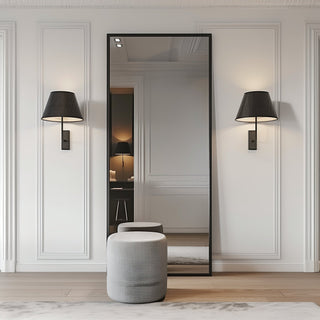
A wall mirror crosses into "large" at roughly 140cm or taller in portrait, or 100 x 100cm and above for square and round shapes. That threshold matters because crossing it changes the install. Below those sizes, two plasterboard anchors and a level usually do the job. Above them, the mirror's weight pushes past the practical limit of Gib alone, and the mount has to land on a stud, span two studs with a cleat, or use rated toggles that can carry 25kg+ each. This guide walks through the three size brackets that matter in NZ homes — large square or round (around 100 x 100cm), mid-large statement (around 120 x 100cm to 140 x 100cm), and genuinely oversized (200cm+ in either direction) — pairs each to a real C&F mirror and explains how to hang it safely on Kiwi plasterboard without ripping a sheet of Gib off the wall.
Key takeaways
- "Large" starts at 140cm portrait or 100 x 100cm square or round — the size where weight passes 15kg and stud-finding becomes mandatory.
- 10mm NZ plasterboard alone holds about 8 to 10kg per fastener safely; two anchors together give around 16kg of practical capacity before the board fails.
- Mirrors over 30kg or wider than 150cm need a French cleat hitting two studs — never four plasterboard anchors alone.
- For a 220 x 120cm Lowen X at 49kg, the right answer is two studs, a steel cleat, and an anti-tip strap on the bottom edge.
Where the threshold actually sits
"Large wall mirror" is a phrase Kiwi shoppers search for around 521 times a quarter, but the size it points to is genuinely ambiguous. A 70 x 50cm hallway accent feels large in a narrow villa corridor. A 200 x 100cm rectangle feels small above a 3m fireplace. The honest threshold is the one the install reality forces — once a mirror clears 140cm portrait or 100 x 100cm in a square or round format, the weight typically passes 15kg, and 15kg is where a single plasterboard toggle stops being a safe answer on its own.
That gives three practical brackets, each tied to a different mounting strategy:
- Large threshold (15 to 20kg): 100 x 100cm round or square. One stud or two rated toggle anchors. Examples — Aure Round 100 x 100cm at 16kg.
- Mid-large statement (15 to 25kg): 120 x 100cm to 140 x 100cm. One or two studs with a screw-mount cleat. Examples — Le Vue Window 120 x 100cm at 15kg.
- Genuinely oversized (35 to 55kg): 200cm+ in either dimension. French cleat across two studs, plus an anti-tip detail. Examples — Lowen X 220 x 120cm at 49kg.
The three real C&F mirrors below sit one to a bracket. The hardware story changes at each step.
Bracket one — large threshold (around 100 x 100cm, 15 to 20kg)

This is the entry point to the large category. A perfectly round 100cm mirror weighs around 16kg, sits at 145 to 150cm centre height comfortably, and works above any standard 80 to 100cm console table. The Aure Round 100 x 100cm — oak-toned frame, 16kg — is our representative piece for this bracket, and it is the most-converted round wall mirror in our range over the last 90 days for a reason: 100cm is the size where round shapes start reading as architectural rather than decorative.
Hardware for 16kg: two M5 hollow-wall anchors rated to 25kg+ each (Snaptoggles or similar steel toggles), spaced to match the D-rings or wire on the back of the frame. If one or both anchors lands on a stud, even better. The mirror's weight is comfortably inside the 50kg combined capacity of two rated toggles, so plasterboard alone is fine for this bracket — provided the toggles are quality-rated, not the brittle plastic anchors that come with bargain bin picture-hanging kits.
Where it works: entry foyers, hallway feature walls, above a low console in a sitting room, opposite a window to bounce daylight. The round shape softens square architecture in any of those spots.

Aure Round Wall Mirror | 100 x 100cm
From $195.00$355.00 · 16.0kg · or 4 fortnightly Afterpay payments
Shop now →Bracket two — mid-large statement (around 120 x 100cm, 15 to 25kg)

The mid-large bracket is where shoppers usually stop scrolling. A 120 x 100cm wall mirror is wide enough to dominate a console wall but narrow enough to hang in a standard NZ lounge or dining room. The Le Vue Window 120 x 100cm — arched top, matte black 4 by 4 grid, 15kg — sits in this bracket and earned 20 conversions and over $1,300 in revenue over 90 days on its own product page. It is the wall mirror our customers most often describe as "the one that finally felt like a piece, not a plate."
Hardware for 15 to 25kg: one or two M6 toggle bolts hitting at least one stud, or a 60 to 80cm aluminium screw cleat that spans two studs. The cleat option is the safer route for any framed mirror with metal grid work, because the frame can deform under point loads if the anchors are not perfectly aligned with the back fittings. A cleat distributes the load along the entire top edge.
Where it works: above a console in a lounge or dining area, on a feature wall in an entry, opposite a south-facing window in a south Island home where light is at a premium. The arched top brings shape variety; the grid breaks up a flat reflection into something more architectural.

Le Vue Window Wall Mirror | 120 x 100cm
From $299.00$399.00 · 15.0kg · or 4 fortnightly Afterpay payments
Shop now →Bracket three — genuinely oversized (200cm+, 35 to 55kg)
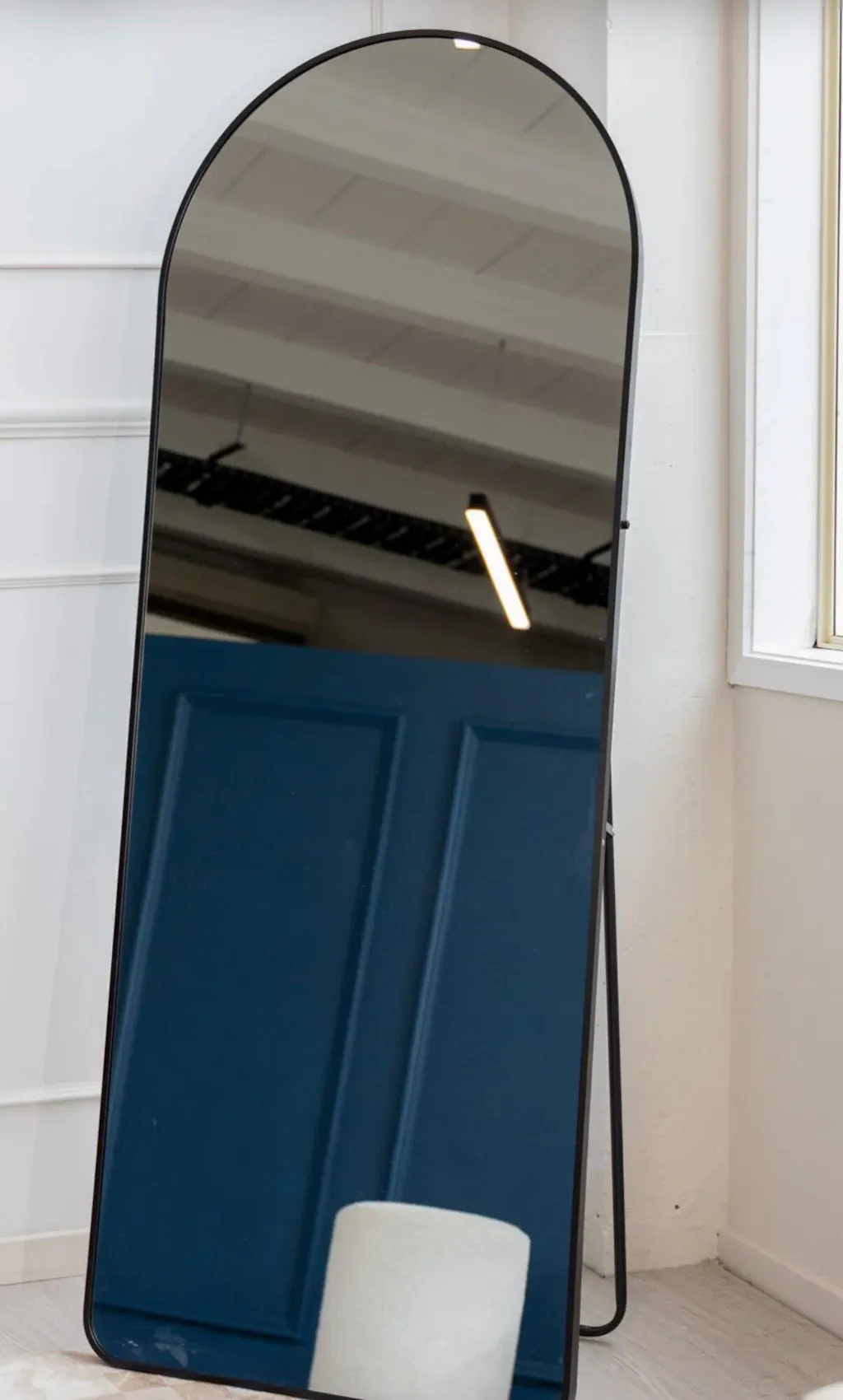
Past 200cm the install conversation changes entirely. The Lowen X 220 x 120cm — thin matte black aluminium frame, 49kg — is the heaviest wall mirror in the C&F range. It is the upper end of "large" — and at 49kg, it is also the boundary where a wall mount stops being a casual decision and becomes a structural one. Most homes that buy the Lowen at 220cm choose to lean it rather than hang it, simply because leaning a 49kg mirror against a wall is mechanically easier than rigging the right cleat. Either path works; the choice is mostly about whether the room has the floor space.
Hardware for 35 to 55kg: a steel French cleat (60 to 80cm long, around 4mm thick, rated to 80kg+) that screws into at least two studs with M6 wood screws penetrating at least 35mm into the timber. Plasterboard anchors alone — even Snaptoggles rated to 30kg each — are not the right answer at this weight. Studs are 600mm apart in standard NZ framing, so a 60cm cleat will reliably catch two of them. After hanging, a small anti-tip strap from the back of the frame to a third stud or skirting eye-screw is the residential AS/NZS 1170 fix.
If you choose to lean instead: the foot of a 220cm portrait mirror sits 8 to 10cm out from the skirting at roughly a 5-degree angle. Felt or rubber feet on the bottom edge, an anti-tip strap to a stud, and you are done — no plasterboard worries, no cleat. Most Lowen owners go this route, especially in rentals.
Where it works: in lounges with 2.7m+ ceilings (post-2000 builds, older villa front rooms with lath-and-plaster), at the end of a long open-plan corridor where the reflection extends a sightline, or as the standout piece in a primary bedroom or large dressing room. In a standard 2.4m room the 220cm height starts to feel oppressive; the Lowen really wants the height to breathe.

Lowen X Rectangular Full Length Mirror | 220 x 120cm
From $895.00$955.00 · 49.0kg · or 4 fortnightly Afterpay payments
Shop now →The hardware that actually matters

Three pieces of hardware do almost all of the work on every large wall mirror in NZ.
Snaptoggle-style metal toggle anchors. A stainless steel wing folds flat to pass through a 12mm pilot hole, then springs open behind the plasterboard. Each anchor is rated to around 30kg in 10mm Gib (less in 13mm sheet board), and two together carry the typical 16 to 25kg mid-large range comfortably. They are the upgrade from the plastic anchors most flat-pack mirrors ship with, and they cost about $4 each at Bunnings or Mitre 10. For any wall mirror over 12kg, this is the minimum.
Stud finder. A $25 to $40 device that detects the timber framing behind plasterboard. Standard NZ wall framing is 90 x 45mm pine at 600mm centres, so studs are predictable but not always exactly where you expect — a cheap stud finder pays for itself the first time it stops you anchoring blind into a gap. If the budget version is unreliable, the magnetic-only models that find drywall screws are surprisingly accurate.
French cleat. Two interlocking 45-degree rails — one mounts to the wall, the other to the back of the mirror, and the mirror simply lifts down onto the wall rail. Steel cleats rated to 80kg are around $30 at hardware stores. For anything over 30kg or wider than 150cm, the cleat is the right answer because it spreads the load along an entire edge rather than concentrating it on two anchor points.
Plasterboard reality, NZ-specific
Three things shape large wall mirror decisions in NZ that do not in other markets.
Sheet thickness. Most homes built after 1980 use 10mm Gib over 600mm-spaced 90 x 45 pine studs. A 10mm sheet alone holds around 8 to 10kg per quality fastener before the paper face gives way around the anchor. Newer builds and bathroom walls often use 13mm or 16mm fire/wet-area sheet, which adds about 25% to that capacity but is still no substitute for a stud at over 25kg.
Stud spacing. 600mm centres is the New Zealand residential standard. That means a 60cm-wide cleat will reliably catch at least one stud, and an 80cm cleat will almost always catch two. For a wall mirror narrower than 60cm — like the 100 x 100cm Aure or any portrait under 80cm wide — finding a single stud and supplementing with a toggle is the practical install. For anything wider, span two studs with a cleat.
Earthquake load. AS/NZS 1170 covers the seismic load any wall-fixed object needs to resist in a New Zealand home. For a mounted mirror, hitting at least one stud with the cleat covers what the standard expects. For a leaning mirror, an anti-tip strap from the back of the frame to a wall stud or skirting eye-screw is the residential equivalent — the same fix that building code expects for any tallboy or freestanding bookshelf taller than the person standing next to it. Anti-tip straps cost around $8 at any hardware store.
Where large wall mirrors work, room by room
Lounge or living area
The mid-large 120 x 100cm Le Vue Window above a console or sideboard, or the oversized 220 x 120cm Lowen X above a low media unit. Avoid hanging anything over 150cm wide directly above a sofa headrest — leaving 30 to 40cm of clear wall between the top of the sofa and the bottom of the mirror keeps the room from feeling crowded.
Entry foyer
The 100 x 100cm Aure Round above a console table is the everyday answer. Round breaks up the square architecture of most NZ entry walls, and 100cm is large enough to feel intentional without dominating a typical 1.2m console.
Dining room
The 120 x 100cm Le Vue Window opposite a south-facing window doubles the daylight back across the table. Keep the bottom edge at least 20cm above the back of the highest chair so a guest standing up does not catch their head on the frame.
Long hallway
A 100cm round at the end of the corridor extends the visual length and bounces light back along the hall. Avoid landscape rectangles in narrow hallways — they cut the corridor visually rather than extending it. See our hallway mirror guide for narrow-corridor specifics.
Primary bedroom or dressing area
The 220 x 120cm Lowen X portrait, leaning against a wall the bed faces. Treats the mirror as architecture rather than furniture and gives a head-to-toe reflection from any standing position in the room.
Where large wall mirrors do not work
Two cases where bigger is not the right call.
Bathrooms wider than 100cm. Steam, splash and ventilation gaps degrade silvering at the edges within five years on most large bathroom mirrors. If the room is the only spot for the mirror, accept the lifespan or pick a vanity-specific mirror with a sealed back.
East or west exterior walls in strong direct sun. Sustained UV exposure shortens the silvering life and warms the frame. For sun-facing walls, drop down a bracket — a 120 x 100cm framed piece holds up better than a 200 x 100cm frameless one, simply because the frame protects the silvering edge.
Otherwise — most NZ rooms with at least one wall longer than 1.2m and no direct exterior sun on it — large wall mirrors are the most under-used decorative move in residential design here. The cost gap between a 70cm wall mirror and a 100 x 100cm one is around $80; the difference in how the room reads is the difference between a frame and a feature.
FAQs
What size counts as a large wall mirror in NZ?
In a New Zealand context, a wall mirror crosses into large territory at roughly 140cm or taller in portrait orientation, or 100 x 100cm and above for square or round shapes. The threshold matters because it changes the install. Below those sizes, two plasterboard anchors usually do the job. Above them, the mirror's weight typically pushes past 15kg and the mounting needs to land on a stud or use a French cleat. Extra large is anything over 200cm tall or 200cm wide, like the 220 x 120cm Lowen X — which sits at 49kg and needs two studs and proper rated hardware.
How much does a large wall mirror weigh?
Weight scales roughly with surface area and frame mass. A 100 x 100cm round Aure with a thin oak frame is 16kg. A 120 x 100cm arched Le Vue Window with a steel grid is 15kg. A 200 x 100cm Aldren X with a thin aluminium frame sits around 35kg. The 220 x 120cm Lowen X reaches 49kg. As a rule of thumb, every extra 50cm of vertical dimension on a framed mirror adds roughly 10 to 15kg, depending on frame profile and glass thickness.
Can plasterboard alone hold a 25kg wall mirror?
Not safely. Standard 10mm Gib plasterboard with two quality toggle anchors holds about 16kg of practical capacity before the board itself begins to deform around the fastener. A 25kg mirror needs at least one anchor landing on a stud, or a wall cleat that spans two studs. Snaptoggles rated to 25kg+ each can do the job in a pinch on plasterboard alone, but for any mirror over 20kg the honest answer is to find a stud. Anything over 35kg should always sit on a French cleat that hits two studs.
What is a French cleat and when do I need one?
A French cleat is a pair of interlocking 45-degree timber or steel rails. One half mounts to the wall, the other to the back of the mirror. The mirror lifts down onto the wall rail and the angled cut locks it flush. For a 220 x 120cm Lowen X at 49kg, a French cleat that screws into two studs is the right answer — distributing the load across two structural points means no single anchor carries more than around 25kg. Any wall mirror over 30kg, or any mirror wider than 150cm, benefits from a cleat over individual anchors.
Where should I hang a large wall mirror in an NZ home?
The honest answer is wherever the wall can carry it and the reflection adds something. Practical favourites: above a console table in an entry foyer, above a fireplace mantle in a lounge, at the end of a hallway to bounce light back along the corridor, or on a feature wall in an open-plan living area. Avoid bathrooms above 100cm wide unless the room is well ventilated — large mirrors in damp rooms degrade at the silvering edges within five years. Avoid east-facing or west-facing exterior walls in strong direct sun for the same reason.
How high above the floor should a large wall mirror sit?
Centre the mirror at average eye level — around 145 to 150cm from the floor to the centre of the glass. For a 100 x 100cm Aure, that puts the bottom edge at about 95cm and the top at 195cm — which clears most NZ 2.4m ceilings comfortably. For a 120 x 100cm Le Vue, drop the centre slightly so the bottom sits closer to console height (around 75 to 85cm). For very large pieces like the 220 x 120cm Lowen X, ignore eye level and treat the mirror as architecture — typically 90 to 110cm from the floor to the bottom edge so it pairs with a low console or media unit beneath it.
Browse the wall mirror range
Wall mirrors from $145 to $895. NZ wide delivery via Mainfreight live rates. 4.94 stars from 195+ reviews. NZ Owned. Pay in 4 with Afterpay.
Shop wall mirrors →Looking at smaller wall mirrors instead? The hallway mirror guide covers narrow-space picks like the 180 x 50cm Nocturne and the entryway-friendly Aure Round. For a more aesthetic-focused take on hero pieces, see statement wall mirror NZ. The general wall mirrors NZ buying guide covers shape and style decisions across the range, and the rectangle mirrors NZ deep-dive walks through portrait and landscape sizing for the rectangle shape specifically. The full length pillar — full length mirror NZ — is the parent guide for all sizing decisions.
Written by C&F Creation Team — NZ Owned mirror business, Auckland based, Mainfreight delivery NZ wide.