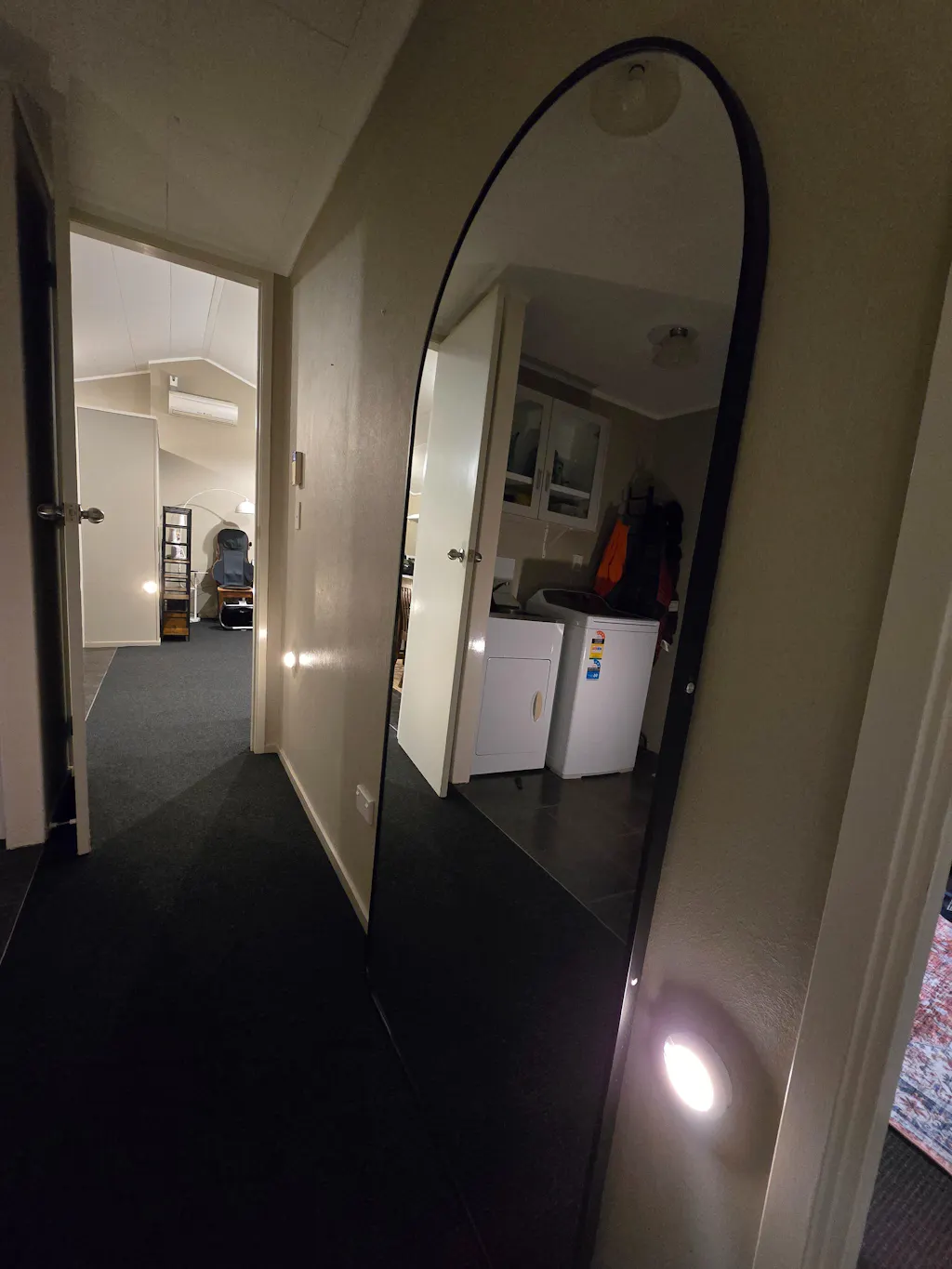
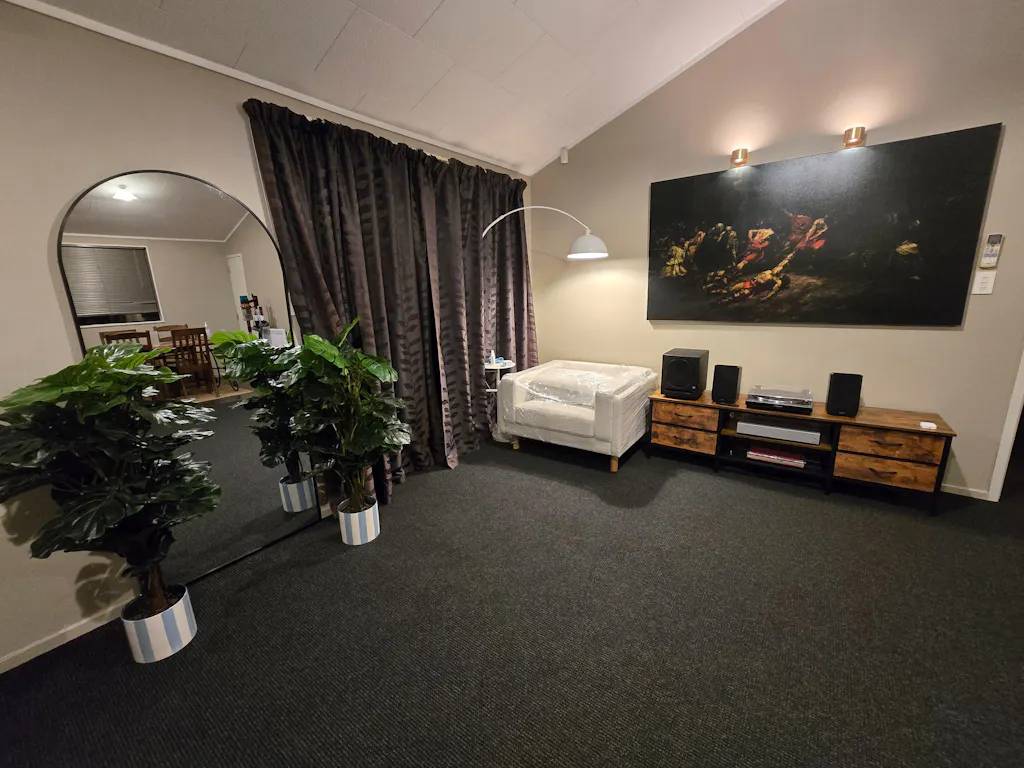
If you're renting in New Zealand, you've probably faced this situation more than once. You want to hang a mirror, but the tenancy agreement says no drilling. Or maybe you're just not sure what your rights are. Either way, the good news is that there are plenty of no-drill mounting options that work well for mirrors — and some of them are genuinely impressive.
This guide covers the main methods available to renters in NZ, what they can realistically hold, and how to choose the right approach for your mirror.
New Zealand's Residential Tenancies Act has become clearer in recent years about what tenants can and cannot do without landlord permission. In most standard tenancy agreements, putting holes in walls — even small ones — requires written consent. Some landlords are flexible about this, but many are not.
The result is that a lot of renters end up avoiding mirrors altogether, or they buy small lightweight pieces that feel like a compromise. That doesn't have to be the case. A well-chosen mounting method can support a full-length leaner mirror, a stylish wall mirror, or a door-hung frame without leaving a mark.
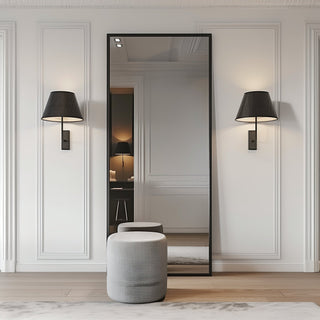
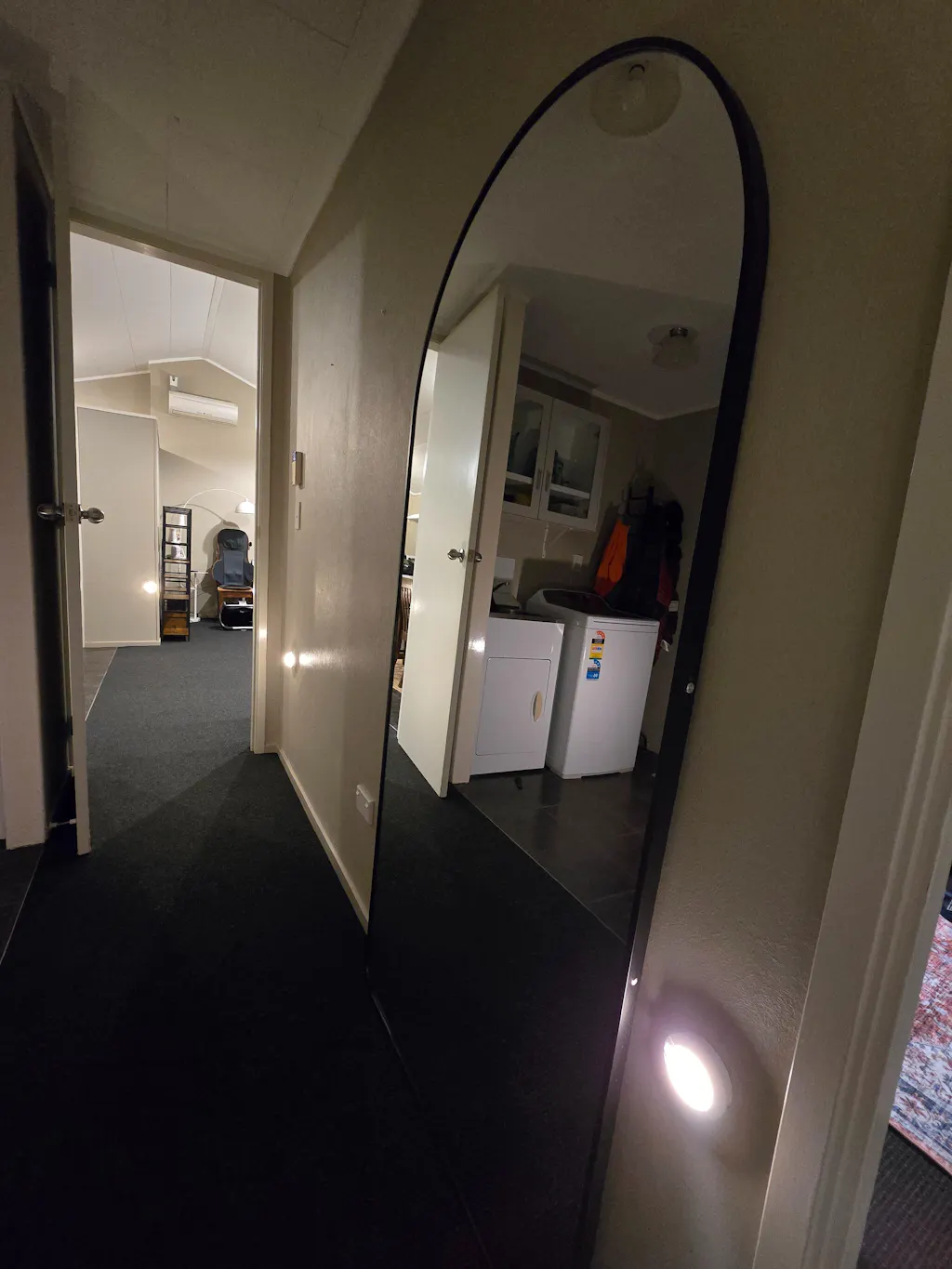
This is the simplest answer. A freestanding or leaning mirror doesn't need any mounting at all. You simply lean it against a wall or a piece of furniture, and it stays in place on its own weight.
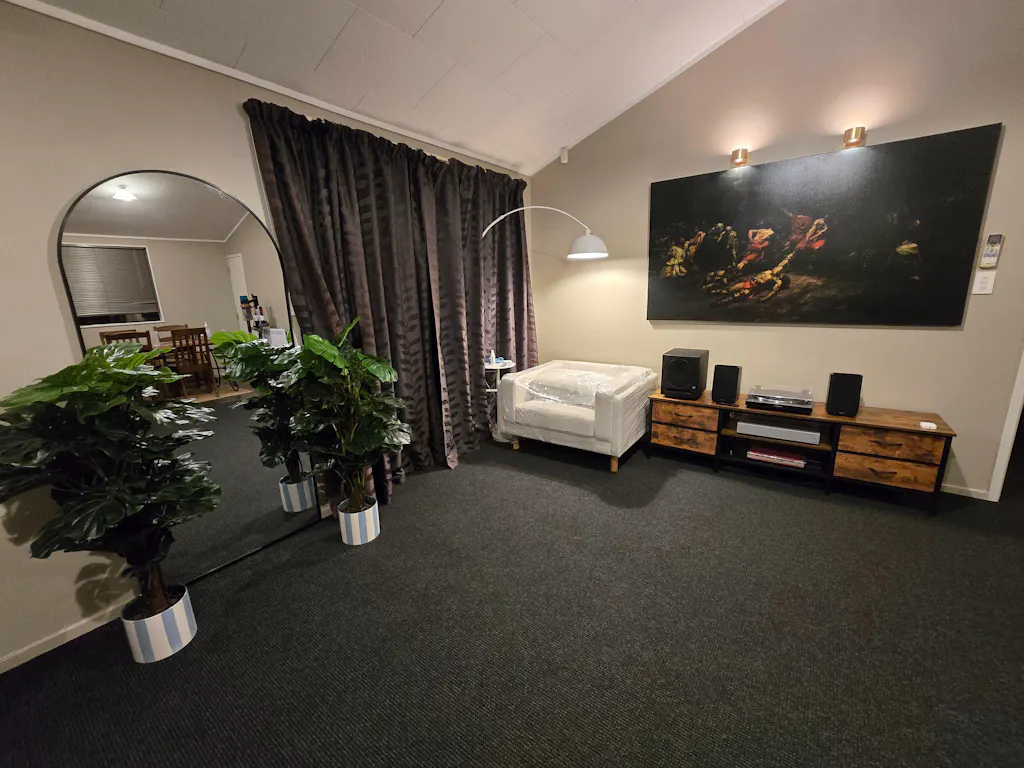
Leaning mirrors have become genuinely popular in NZ interiors over the past few years, partly because they look intentional rather than like a workaround. A tall arched mirror leaned against a bedroom wall can look styled and deliberate.
The main thing to think about here is stability. Larger mirrors can topple if they're not leaned at a good angle, or if they're on a smooth hard floor. Using an anti-tip strap anchored to a heavy piece of furniture — rather than the wall — can add security without requiring drilling.
Products like 3M Command strips and their equivalents have improved significantly. The heavy-duty versions can now support several kilograms per strip, and when used correctly they're genuinely reliable for small to medium mirrors.
The key is following the instructions carefully. That means cleaning the wall surface thoroughly before application, pressing the strips firmly for the recommended time, and waiting the full cure period before hanging anything.
Adhesive strips work best on smooth painted plasterboard surfaces. They don't perform well on textured paint, wallpaper, brick, or timber panelling. If your wall surface is anything other than smooth flat paint, test first with a non-mirror item.
For heavier mirrors — anything over about 4 to 5 kilograms — adhesive strips alone may not be the right answer. You can use multiple strips and distribute the weight, but there's a practical ceiling on what this method can safely support.
Similar in concept to adhesive strips, adhesive hooks use a foam or gel adhesive backing that bonds to the wall surface. These are available in NZ from hardware stores and online, and the better-quality versions are surprisingly strong.
These work well for mirrors that have a wire or hanging bracket on the back. The mirror hangs from the hook just as it would from a nail or screw, but without needing to drill anything.
The weight ratings on these hooks vary considerably by brand, so it's worth checking the packaging carefully. As a general approach, it can help to use two hooks spaced apart rather than a single central hook, which distributes the weight and reduces the chance of the mirror tilting over time.
Doors are often overlooked as a mounting surface, but for full-length mirrors they can be ideal. Over-the-door mirror hangers use the top of the door frame as a support point, with no adhesive or fixing required at all.
This method works particularly well for lightweight to medium mirrors and for bathroom or bedroom doors where a full-length mirror makes practical sense anyway. The mirror sits flat against the door face and swings with the door, which some people find convenient and others find a bit awkward.
It's worth noting that not all over-door hooks are built to the same standard. Cheap versions can scratch the door edge or fail to sit flush. If you're going down this path, look for padded or rubber-lined hooks and make sure the hanger is rated for the mirror's weight.
This one is slightly more technical but worth knowing about. Some mirrors — particularly frameless wall mirrors — can be held in place using adhesive-backed mirror clips or channel mounts. These are small brackets that grip the edge of the mirror glass and adhere to the wall surface without drilling.
The result can look very clean and professional, especially for round or square frameless wall mirrors. The Aure Round Wall Mirror is a good example of a mirror that can complement this kind of clean, minimal mounting approach depending on its installation setup.
This method does require careful measurement and alignment, and it works best on mirrors with flat straight edges. It may not be suitable for all mirror styles.
Whatever method you choose, the surface you're mounting to matters a lot. In most NZ rental properties you'll be dealing with painted plasterboard, which is generally the most adhesive-friendly surface.
Painted brick or concrete — common in some older Wellington and Christchurch properties — is much more challenging. Adhesive products often don't bond well to textured or porous surfaces. In these situations, a leaning or freestanding mirror may genuinely be your best option.
Textured paint is also worth watching out for. If the wall has a rough or stippled texture, adhesive strips and hooks may not make full contact with the surface and can fail under load.
One of the most common mistakes with no-drill mounting is underestimating the weight of the mirror. A full-length mirror with a solid timber frame can weigh considerably more than it looks. It's worth checking the product weight before deciding on a mounting method.
As a rough guide, adhesive-based methods tend to be most reliable for mirrors up to about 5 to 8 kilograms on suitable surfaces. For heavier mirrors, a freestanding or leaning approach is generally safer.
Where a larger wall mirror is the goal and drilling isn't an option, it may be worth having a conversation with your landlord. Some tenants find that landlords are willing to give consent for a single hook or mounting point, particularly if the tenant agrees to fill and paint the hole on vacating.
Even with no-drill methods, it's worth thinking ahead to when you move out. Some adhesive products — particularly if left on for a long time — can leave marks or pull paint off when removed. The packaging usually indicates whether the product leaves a residue or not.
Testing a small adhesive strip in an inconspicuous spot before committing to a full installation is a sensible precaution. Some renters also photograph the wall before and after installation, which can be useful if there's a dispute about the condition of the property at the end of a tenancy.
The range of no-drill options available in NZ today is genuinely good. Whether you prefer the simplicity of a leaning mirror, the convenience of adhesive hooks, or the clean look of an over-door setup, there's likely a method that suits your mirror and your rental situation.
A freestanding full-length mirror is probably the lowest-effort option if you want something that simply works without any mounting considerations at all. Browse the full-length mirror collection to find a style that suits your space — most of these can lean beautifully without needing to touch the wall at all.
For smaller wall mirrors in rental-appropriate weights, the wall mirror range includes options that pair well with quality adhesive hooks, provided the surface and weight ratings align.
If you're ordering from C&F Creation and shipping to a NZ address, flat-rate shipping applies from $35 depending on your region. Auckland metro delivery is $35, North Island is $75, and South Island is $85. It's a straightforward way to get a quality mirror delivered to your door — whether you're renting or not.
The main thing is to measure your mirror, know its weight, and choose a mounting method that matches the surface you're working with. Rental properties can be just as well-styled as owned homes. The mounting method is simply a different part of the equation.