Listen to this guide

A round mirror softens the right angled geometry of a NZ home — square windows, rectangular doorframes, plasterboard corners — and bounces daylight further into rooms that go dark by 5pm in winter. Pick the diameter to match the wall (60cm above a vanity, 80cm above a console, 100cm above a sofa or sideboard), anchor it correctly into NZ plasterboard, and the round shape does the styling work for you.
Key takeaways
- Diameter rule: match round size to the wall feature beneath — 60cm vanity, 80cm console, 100cm statement.
- NZ context: round mirrors over 100cm start to feel cramped under a 2.4m ceiling; for full body, switch to a 155cm oval.
- Hanging: a 100cm round weighs 6 to 9kg — use snap toggles or heavy duty toggle bolts on plasterboard, or locate a stud.
What makes a round mirror distinctive in a NZ home?
Round is the only mirror shape with no flat side. Every mirror you have ever seen in a Kiwi villa, plaster ceiling, or 1990s subdivision shares one thing: hard angles. Window frames, door frames, joinery, plasterboard, ceiling cornices, tile grout — all of it is rectilinear. A round mirror is the deliberate exception. It is the curve the room is missing.
The visual effect is two things at once. First, a circle is a finished form: it has no top, no bottom, no left, no right, so the eye reads it as a complete object rather than a directional one. That makes round mirrors easy to centre. They look balanced from the moment you hang them, with no fuss about which way is up.
Second, the curved silhouette breaks the line of sight when a wall is dominated by horizontals or verticals. That is why round mirrors work above linen sofas, rectangular console tables, or square windows — they create a focal point that is genuinely different in shape from everything else, instead of competing with it.

Round versus arched: a quick distinction
If you have been browsing shape options, you have probably also looked at arched mirrors. The shapes feel similar — both have soft tops — but they read very differently in a room. An arch has a flat base and tall straight sides; it is a vertical, doorway shaped form that sits well on the floor or against a feature wall. A round mirror has no base at all; it is a horizontal or wall mounted form that hovers. We compare the two side by side in arch versus round, but the short version is: arch suits floor and wall mount, round only suits wall mount.
What size round mirror works in a NZ room?
Most NZ houses share a common ceiling: 2.4 metres. That sets the upper limit for round diameter, because a circle larger than 100cm starts to feel boxed in by the ceiling line above and the furniture line below. The diameter rule below assumes a standard 2.4m ceiling. For raked or 2.7m ceilings (modern Auckland new builds, mid century lounges, or split level Wellington homes) you can size up by 10 to 15cm.
| Diameter | Best wall feature | Why this size |
|---|---|---|
| 50 to 60cm | Single bathroom vanity, narrow hallway nook, kitchen splashback | Sits comfortably above a 600 to 750mm vanity without overpowering it. |
| 70 to 80cm | Hallway console, entry sideboard, double vanity (one mirror per basin) | Two thirds the width of a standard 1.2m console. Reads intentional. |
| 90 to 100cm | Above a sofa, sideboard, dining buffet, or fireplace | Statement scale. Pulls the wall together at sitting height. The most popular size in NZ. |
| 110cm and up | Double height entries, raked ceiling lounges, large rural homes | Reserve for ceilings above 2.7m. Under a standard ceiling it crowds. |
If you would rather not eyeball it, the mirror size calculator takes wall width and ceiling height and returns a recommended diameter range.
Round mirror sizes in NZ: 60cm, 80cm, 90cm and 100cm
The band table above sizes a round mirror to its wall. In practice most Kiwi buyers search for one specific diameter, so here is what each of the popular sizes actually does in a New Zealand room.
- 60cm round mirror: the small, safe pick. Sits above a single 600 to 750mm bathroom vanity, a narrow hallway shelf, or a study nook. At 3 to 4kg it hangs on a single well rated anchor. Too small to read as a feature wall in a living room.
- 80cm round mirror: the everyday hallway and console size. It fills the wall above a 1.2m console or entry bench without crowding it, and reads as intentional rather than an afterthought. This is the diameter most people picture when they say "a round mirror".
- 90cm (900mm) round mirror: the step up to statement. A 900mm round holds its own above a two or three seat sofa, a sideboard, or a bedroom dresser, and it is the largest size that still feels calm under a standard 2.4m ceiling.
- 100cm (1m) round mirror: the full statement. A metre wide round above a fireplace, a long sideboard, or a bed head owns the wall and bounces the most light. On a 2.4m ceiling 100cm is the sensible upper limit — larger and the circle starts to feel boxed in. C&F’s Aure Round Wall Mirror is exactly this size.
Sizes in between round to the nearest option: an 85cm search is served by an 80cm, a 95cm by a 900mm. If you shop in imperial the common rounds convert cleanly — a 60cm is roughly 24 inches, an 80cm about 32 inches, a 900mm about 36 inches, and a 100cm close to 40 inches. Remember the frame adds to the footprint, so a 100cm mirror with a chunky frame can measure 106 to 110cm across the outside edge, which is worth checking against a tight alcove before you buy.
Round, circular or circle mirror — is there a difference?
No. "Round mirror", "circular mirror" and "circle mirror" all describe the same shape: a perfect circle. New Zealand retailers and search results use the three terms interchangeably, so a search for a circular mirror or a circle mirror surfaces the same products as a round mirror. The only genuinely different curved shapes are the oval — a stretched circle, taller than it is wide, and the one round adjacent shape that works full length — and the fuller organic curvy outlines if you want a soft edge that is not a true circle.
Where do round mirrors actually go in a NZ home?
Five room types absorb 90% of round mirror placements in Kiwi homes. The placements below are the ones we see working over and over again.
1. The entryway above a console. This is the highest impact spot for a round mirror in a NZ home. The circle becomes the first object visitors see, the console anchors it, and the reflected light bounces deeper into the hallway. An 80 to 100cm round above a 1.2 to 1.5m console sets the proportion correctly. Add a single ceramic vase with native foliage and the styling is done.
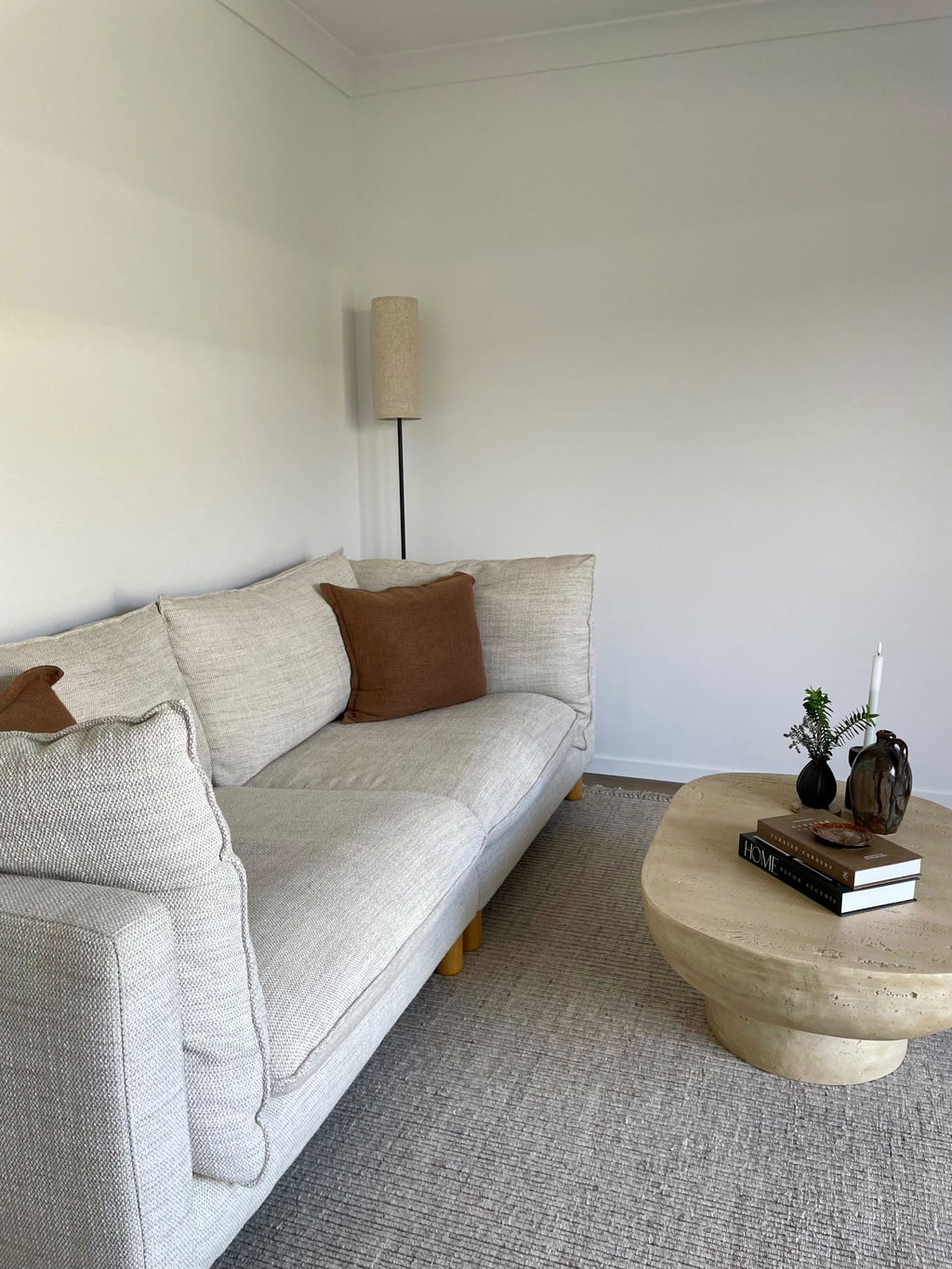
2. The lounge above a low linen sofa. A 90 to 100cm round centred above a three seater sofa is the single most photographed Kiwi interior styling move of the last three years. The round breaks up the verticals of bookshelves and the horizontals of sofa lines. Hang the centre at 145 to 150cm above the floor (the standard art line) and you will get it right first time.
3. The dining room above a sideboard. Less common, but striking. A round mirror above a kauri or oak sideboard reflects the dining table and chandelier behind the diner, doubling the perceived light at dinner time. Pick a frame finish that pairs with the sideboard timber.
4. The bathroom above a single vanity. A 50 to 60cm round above a single basin vanity is a universal upgrade from the builder grade rectangle that came with the house. In a NZ bathroom (often small, tiled to dado, with a single window) the round breaks the dominance of square tile. Sealed backing matters here — coastal humidity will eat the silvering of a cheap mirror within five years.
5. Open plan kitchen, on the dining wall. If your kitchen and dining are one room, a round mirror on the dining side of the room (not over the cooker) reflects the kitchen back into the dining zone. It makes a 35 to 45 sqm open plan feel closer to 50.

How do I hang a round mirror on NZ plasterboard?
NZ residential walls are almost universally 10 or 13mm plasterboard on 90mm timber studs at 600mm centres. That is what you are fixing into. A 100cm round wall mirror with a slim aluminium or wood frame typically weighs 6 to 9kg. A 60cm round weighs around 3 to 4kg. Neither is heavy in absolute terms, but glass is unforgiving — if it falls, it shatters, and replacement is the full retail value.
New Zealand’s dominant plasterboard brand, GIB, notes that lightweight proprietary fasteners are rated only for items up to about 20kg on non fire rated walls, and that heavier loads must fix into framing or stay within the fastener’s own rated limit (GIB plasterboard installation literature). Every round wall mirror we sell sits well under that 20kg ceiling, so the job is simply choosing an anchor rated above the mirror’s weight and, wherever you can, driving into a stud.
Three fixing options, in order of reliability:
- Stud screw (best): if you can locate a stud behind the mounting point, drive a 75mm timber screw into it. This is rated well above any round mirror weight you can buy in NZ. A stud finder makes this five minutes of work.
- Snap toggle anchor (next best): for spans where no stud sits where you want the mirror, a snap toggle is the modern equivalent of the old wing nut anchor. Each one is rated 35 to 50kg in plasterboard. Two of them carry any wall round mirror C&F sells.
- Heavy duty toggle bolt (acceptable): the older sprung wing nut anchor still works fine for round mirrors under 8kg. Rated around 15 to 25kg per fixing on standard plasterboard.
What to avoid: 3M Command strips above a 5kg load, generic small picture hooks rated under 5kg, and anything described as "for posters". A round mirror is not a poster. It is a piece of glass that wants to obey gravity.
For tilt control, hang the D ring on the back of the mirror over the anchor's hook, then lightly press the bottom of the mirror against the wall and add two small adhesive bumpers to the bottom corners of the frame. This stops drift, eliminates rattle, and keeps the mirror flush against the wall.
What about full length? The oval alternative.
Round mirrors are wall mounted statement pieces — they do not work as full length pieces. A 180cm round would need 180cm of wall width as well, which no Kiwi room spares for a single mirror. If you want a full body reflection with the same soft edge appeal, the answer is an oval mirror. If you are weighing the two soft shapes, our round vs oval mirror comparison breaks down which curve suits which wall.
An oval mirror is essentially a stretched circle: rounded top and bottom, gentle straight sides. C&F's round mirror collection includes two ovals exactly for this reason — taller than wide, with the same softening effect on a square room as a round. The Lyra LED (155 × 45cm, wall mounted, with integrated lighting) and the Eclipse (180 × 40cm frameless, lean or wall mount) cover the two common preferences: framed and lit, frameless and minimal.

Frame finish: what suits a NZ home?
Three frame finishes dominate the round mirror category in NZ, and each pairs with a specific room aesthetic.
- Natural wood / oak / pale ash: the warmest option. Pairs with rimu floors, oak sideboards, weatherboard interiors, and the soft Scandi palette popular in modern NZ. The Aure 100cm sits in this category.
- Matte black aluminium: the contemporary option. Reads as architectural, edges crisp, frame slim. Pairs with charcoal joinery, dark concrete or basalt tile, and modern Auckland new builds.
- Brushed brass / aged bronze: the heritage option. Pairs with villa restorations, traditional bathrooms, and any home with brushed brass tapware already chosen. Less common in stock — order ahead.
If you are unsure, follow the rule of three: pick the frame finish that already appears at least twice in the room (light fittings, door handles, console legs, tap finish). The mirror becomes the third occurrence and the room reads intentional.
Three round and round adjacent picks for NZ homes


Want lit? The Lyra Oval LED brings the same 155cm oval silhouette with integrated bathroom grade LED lighting at $155 (was $499) — useful in a south facing dressing room or a windowless bathroom.
See the round mirror collection
Every round and oval piece in stock — true 100cm circle, full length ovals, sealed backings, NZ wide delivery via Mainfreight at live rates calculated at checkout.
Shop Round Mirrors All Wall MirrorsIf you want to keep reading, the round versus rectangular comparison covers the shape decision when you are torn. The arch versus round comparison is the closer call. And the full length mirror NZ buying guide covers every format if you decide oval is the right answer for your bedroom.
Frequently asked questions
Is a round mirror the same as a circular or circle mirror?
Yes. Round, circular and circle mirror all mean a perfect circle and are used interchangeably by NZ retailers, so the three searches return the same products. The only related but different shape is the oval, a stretched circle that is taller than it is wide and suits full length use.
What size round mirror should I buy in NZ?
Use the diameter rule: roughly two thirds of the wall feature it sits above. A 60cm round suits a single bathroom vanity, an 80cm sits well above a console or hallway bench, and a 100cm round reads as a statement above a sofa, sideboard, or fireplace. For a 2.4m NZ ceiling, 100cm is the upper limit before the room feels cramped.
Are round mirrors and oval mirrors the same thing?
No. A round mirror is a true circle, equal in width and height. An oval mirror is taller than wide, with rounded top and bottom and gentle straight sides. In a NZ buying context, round usually means a wall mounted statement piece (60 to 100cm diameter), while oval usually means a leaning or wall mounted full length piece (around 155 to 180cm tall by 40 to 45cm wide). Both share the soft edge appeal that softens a square Kiwi room.
Can I hang a 100cm round mirror on plasterboard?
Yes, but use the right anchor. A 100cm round wall mirror typically weighs 6 to 9kg. Standard hollow wall plasterboard anchors rated above 15kg per fixing handle this safely. Snap toggles or heavy duty toggle bolts are the most reliable in NZ housing. Where possible, locate a stud and screw directly. Avoid the small picture hooks designed for prints, those rated under 5kg are not load suitable for a glass piece this size.
What rooms suit a round mirror in a NZ home?
Entryways, hallways, living rooms above the sofa, dining rooms above a sideboard, and bathrooms above a single vanity. Round shapes soften the rectangular geometry that dominates Kiwi houses (square windows, square tile, plasterboard right angles). They are less natural in narrow walk in robes and walk through laundries where a tall oval or rectangle reads better.
Are oval full length mirrors a good alternative to round?
If you want a full body reflection with the same soft edge feel as round, oval is the answer. A circular mirror over 100cm starts to feel oversized on a 2.4m wall, but a 155cm oval delivers head to toe at a smaller wall footprint. Oval freestanding pieces around 155 to 180cm tall by 40 to 45cm wide are popular in NZ bedrooms for that reason.
How is a round mirror shipped in NZ?
Round mirrors ship NZ wide via Mainfreight, with live rates calculated at checkout. Each piece is crated, corner padded, and delivered to your door (not kerbside). Afterpay is available at checkout if you would rather split the cost over four payments. C&F Creation has 4.9 stars across over 200 reviews keeping that experience consistent.
Final word
Round mirrors do one thing rectangle and arch cannot: they are the only soft, finished, no-direction shape on a wall full of right angles. In a NZ home built around 2.4m ceilings and rectangular plasterboard panels, that one curve resets the whole room. Get the diameter right (60cm vanity, 80cm console, 100cm statement), use the right anchor on plasterboard, and pick a frame that already echoes something else in the room. The shape does the rest.
Written by the C&F Creation Team. C&F Creation is an NZ Owned mirror and lighting business. Mirrors are NZ designed, built with 5mm float glass and sealed backings, and shipped NZ wide via Mainfreight at live rates calculated at checkout. Afterpay available.