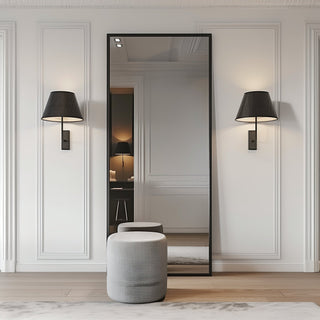
Choosing a full length mirror for your home sounds straightforward until you're standing in a store — or scrolling through product pages at midnight — wondering whether to go freestanding or wall mounted. Both styles have their fans. Both have genuine advantages. And depending on your space, your habits, and who else lives in your home, one is almost certainly going to suit you better than the other.
This guide walks through the honest pros and cons of each — and, because it's the question most buyers forget to ask, exactly how to make a freestanding leaner tip-safe in a Kiwi home.
At the most basic level, a freestanding mirror stands on its own. It may lean against a wall or come with feet or a frame that allows it to stand independently. A wall mounted mirror, on the other hand, is fixed directly to the wall — whether hung from hooks or brackets, or anchored with fixings.
That simple distinction creates a ripple effect across almost every aspect of how the mirror works in your home — including, as we'll get to, how safe it is.
Flexibility is probably the biggest argument for going freestanding. You can move it. Shift it to get better light in the morning. Drag it into the hallway when you're heading out. Put it in the bedroom, then the lounge, then try it in the corner near the wardrobe. You are not committed.
This matters more than it might seem. Many people underestimate how much a mirror's position affects how useful it actually is. Light shifts throughout the day. The ideal angle for checking an outfit may be slightly different to where natural light falls at 7am. With a freestanding mirror, you can experiment freely.
For renters, the appeal is even more obvious. No drilling, no holes in the walls, no risk of losing a bond. A freestanding mirror can move in and out of a rental property without leaving a trace.
Freestanding mirrors also tend to make a stronger visual statement. The frame is often more substantial. The presence in a room is more noticeable. If you want the mirror to be a design feature — not just a functional object — freestanding styles can deliver that with confidence.

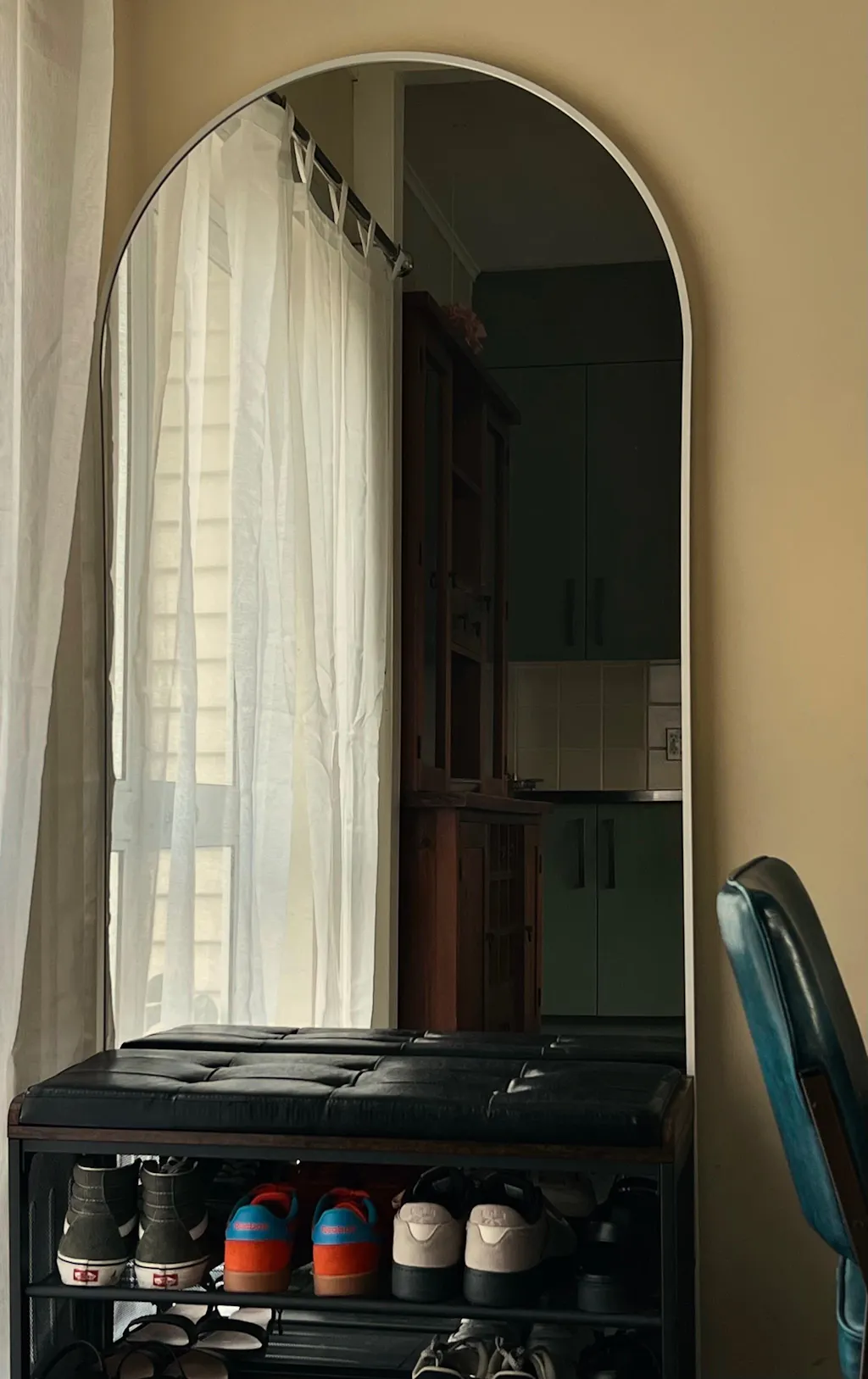
Arched and cathedral-style freestanding mirrors have become a real favourite in NZ interiors over the past few years. The curved top adds softness to a room, works beautifully in both modern and classic spaces, and creates an almost sculptural effect when placed in a corner or against a feature wall.
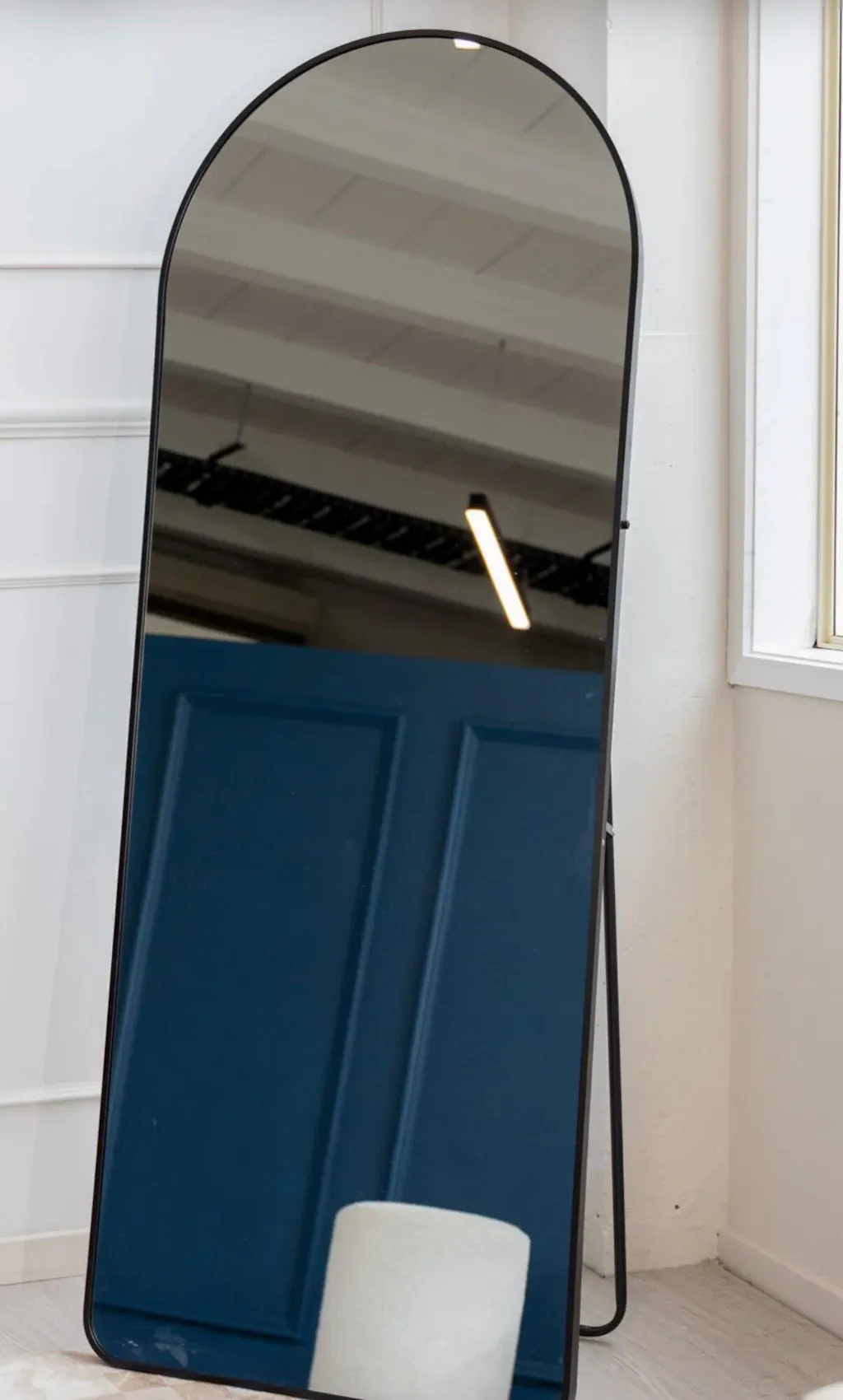
A considered freestanding design with a slim black frame, an elegant arch and clean proportions. Leans beautifully into a corner or stands as a room centrepiece.
The Titan series follows a similar philosophy — clean arched lines, available in multiple finishes, and designed to be moved and styled freely. Browse the full range at cfcreation.co.nz/collections/full length-mirrors.
A freestanding mirror takes up floor space. In a smaller bedroom or a tight hallway, that footprint matters. If you're working with limited square metres, a mirror that leans against the wall and requires some clearance in front of it may feel like it's eating into the room.
Stability is the other consideration — and it's the one most buyers overlook until it becomes a problem. A tall mirror leaning on a smooth floor can shift, and in a home with young children, large pets, or even a heavy-closing door nearby, that's worth taking seriously. The good news is that it's an easy thing to solve, which brings us to the question almost no shop puts on the product page.
Let's be straight about the physics, because it explains everything. A full length leaner is tall, relatively heavy at the top, and resting at an angle on a hard floor. Its centre of mass sits high, and the only thing holding it upright is friction at the base plus the wall behind it. Reduce that friction — a polished floorboard, a rug edge, a curious toddler, a dog's tail, a door slamming, or in many parts of New Zealand a decent seismic nudge — and a leaner can over-balance and come forward. That isn't a reason to avoid freestanding mirrors. It's a reason to anchor them, which takes about ten minutes.
This is exactly the kind of detail that matters in NZ homes. The same thinking behind securing tall furniture against earthquakes — the principle in standards such as AS/NZS 1170 for restraining heavy fixtures — applies to a big mirror. You don't need engineering; you need one simple restraint.
Fit an inexpensive anti-tip furniture strap or an L-bracket (the same type sold for bookcases and drawers at any NZ hardware store) between the back of the mirror frame and the wall. Screw the wall end into a timber stud where you can; on plasterboard, use a rated heavy-duty anchor. This lets the mirror still lean for the look you want, while making it physically unable to topple forward.
For the actual fixing how-to — finding studs, choosing anchors and getting it level — follow our step-by-step guide to fixing a mirror to plasterboard in NZ. Renting? Our no-drill mounting options include bond-safe ways to stop a leaner shifting.
A few honest extras worth knowing: a wider, weighted base resists tipping far better than a narrow one, so favour a generous footprint if children are about; a thin anti-slip pad under the base adds friction on slick floors; and the steeper a mirror leans the lower its centre of gravity sits, so avoid standing a tall leaner nearly vertical. If you'd rather not anchor at all — a busy nursery, a playroom, a home with toddlers — that's a genuine signal to wall mount instead, and we cover the safer option next. If you're unsure whether a particular C&F mirror suits anchoring, check the product page or just ask our team before you buy; we'd far rather help you set it up safely.
A wall mounted full length mirror does not touch the floor at all. It hangs at whatever height suits you, stays exactly where you put it, and frees up the floor entirely. In a small bedroom or a narrow hallway, this can feel genuinely transformative — and in a home with small children, a securely fixed mirror is inherently the safer choice, because there's nothing on the floor to knock over.
There is also a sleekness to a wall hung mirror that freestanding styles rarely match. The look is clean and intentional. The mirror appears almost to float. For people who like minimal, uncluttered spaces, a wall mounted mirror can be exactly right.
Bathrooms almost always call for wall mounting. The humidity, the floor space, the need for the mirror to be at a specific height — all of it points in the same direction. And in a hallway, a slimly framed wall mirror at eye level can make the space feel twice as wide without taking up a centimetre of floor.

Wall mirrors also work well as statement pieces above furniture. Above a console table in the hallway, above a dresser in the bedroom, or as part of a gallery wall in the living room — the possibilities are genuinely broad.
For anyone who wants something a little different, round wall mirrors offer a softer look that can complement arched architectural details or simply break up a room full of straight lines and rectangles.
A slim natural light-oak frame in a clean circular form. A popular wall mounted choice for hallways, bathrooms and living spaces; the round shape softens a room and pairs well with most interiors.
The obvious downside is the commitment involved. You need to drill, find studs or use appropriate wall anchors, and accept that the mirror is not moving easily once it's up. For renters, this is typically a dealbreaker. For homeowners who are still figuring out their layout, it can also feel premature.
Getting the fixing right matters too. A full length mirror is heavy, so on plasterboard you'll want rated heavy-duty anchors or, ideally, a screw into a stud — the same care that makes a freestanding anchor effective. A mirror hung slightly too high or too low can also be frustrating to use every day, and in a shared home, finding the ideal height for everyone is a genuine compromise.
Before you commit to either style, it helps to work through a few practical questions.
Do you rent or own? If you rent, freestanding is almost always the smarter call — and an anti-tip strap keeps it safe without damaging the wall. If you own, both options are fully on the table.
How much floor space do you have? In a compact room, wall mounted may genuinely work better. In a spacious bedroom or dressing room, freestanding can add presence and character.
Do you have young children or large pets? Safety matters most here. Either wall mount, or choose a freestanding mirror with a wide weighted base and anchor it to the wall. An un-anchored leaner in a busy family room is the one combination to avoid.
Will the mirror move rooms over time? If you are likely to want to restyle or redecorate and take the mirror with you, freestanding makes that far easier.
Are you after a design statement or a practical tool? Both can be beautiful, but freestanding frames tend to carry more visual weight and presence.
For freestanding mirrors, the placement angle can make a surprising difference. A slight forward lean — rather than perfectly vertical — tends to give a more flattering reflection, and as a bonus it keeps the centre of gravity lower. Position the mirror where morning light comes in from the side rather than directly behind you.
For wall mounted mirrors, consider what will appear in the reflection. A mirror facing a window can bring in light and create the illusion of space. A mirror facing a blank wall just reflects more blank wall. Think about what you want to frame.
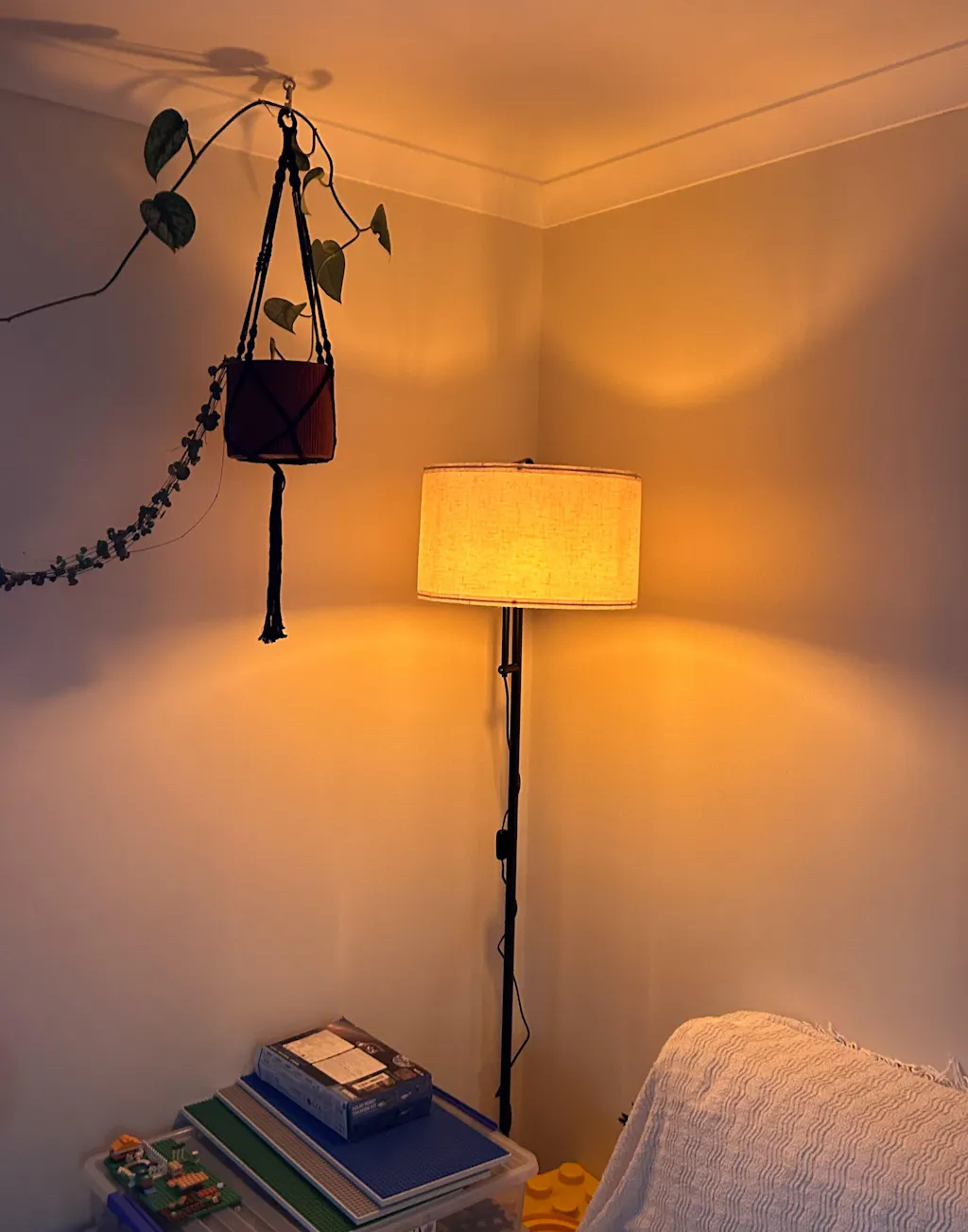
In both cases, pairing a mirror with good lighting makes a real difference. A floor lamp positioned beside or behind a freestanding mirror can create a dressing room effect that looks genuinely beautiful.
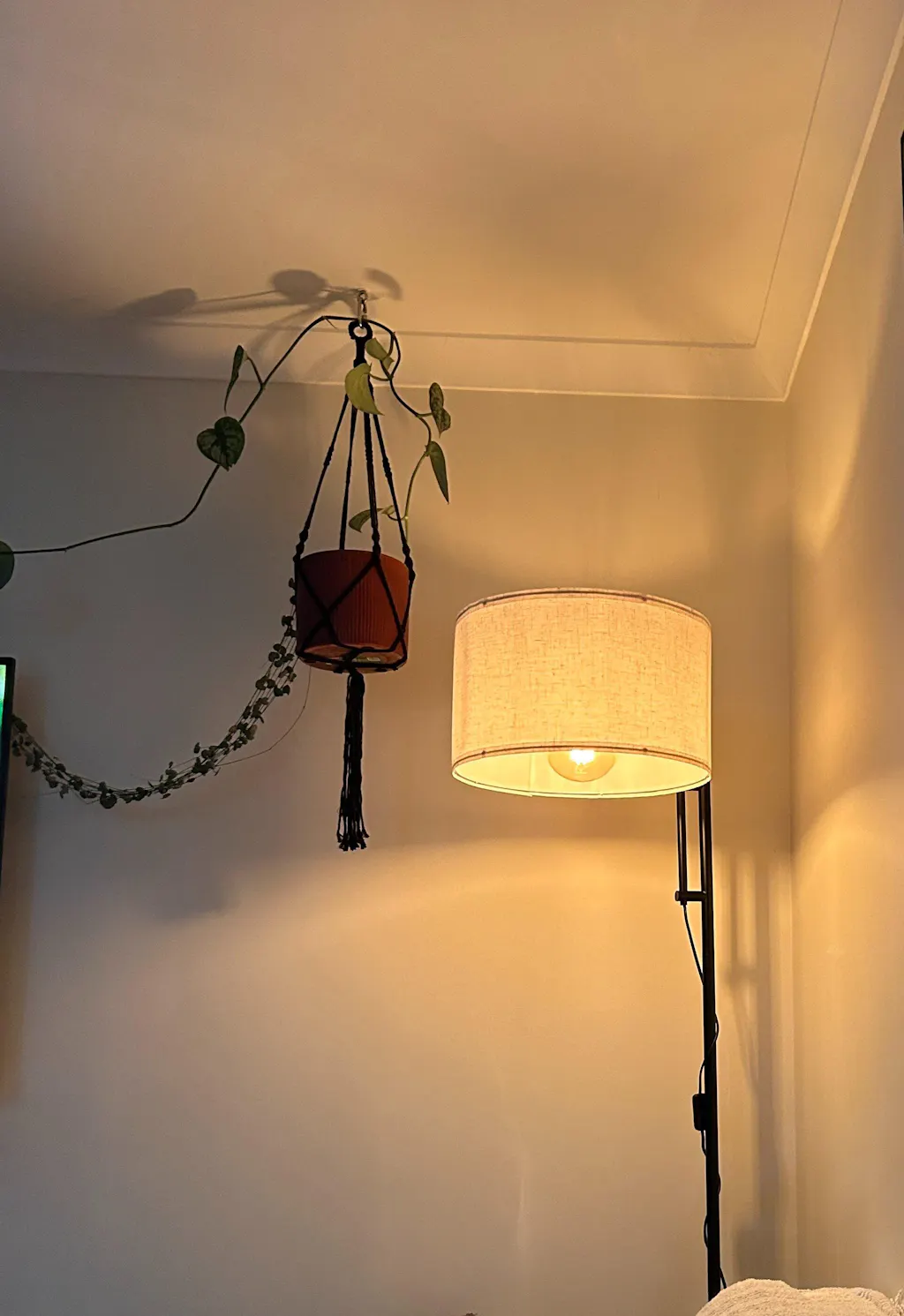
A sleek matte-black floor lamp that pairs beautifully with full length mirrors. The directed light creates a dressing room effect in any bedroom or corner space.
At C&F Creation, full length mirrors currently range from around $95 to $399 depending on size, frame material and finish — the Arcadia X arched leaner sits at $285 and the Aure round wall mirror at $195 in our current range. Wall mirrors generally start a little lower and rise with size and frame complexity.
We deliver NZ wide via Mainfreight, with live freight rates calculated at checkout based on your address — so you only ever pay the real cost of getting your mirror to your door, carefully packed.
There is no universally correct answer here. If flexibility, portability and visual presence matter most, freestanding is probably your style — just budget ten minutes to anchor it. If you want clean lines, minimal floor impact and a permanent installation that holds its position perfectly, wall mounted may be the better fit, and it's the safer default for homes with small children.
For many homes, the best answer is actually both — a freestanding full length mirror in the bedroom or dressing room, and a wall mirror in the hallway or bathroom. They serve slightly different purposes and can complement each other beautifully.
Whatever you choose, the key is to pick something you genuinely love looking at — and to set it up so it's safe to live with. A mirror is one of the objects in your home you engage with every single day. It is worth getting right.
Browse the full range at C&F Creation full length mirrors, explore our wall mirrors collection if you're leaning that way, or read why you can look different in different mirrors before you buy.
Is a freestanding (leaning) mirror safe with kids and pets?
It can be, but only if it's anchored. A tall leaner has a high centre of gravity and rests on friction alone, so children, pets or a knock can tip it forward. In a home with young kids the safest choices are to either wall mount the mirror, or choose a freestanding style with a wide, weighted base and secure it to the wall with an anti-tip strap or bracket. An un-anchored leaner in a busy family room is the combination to avoid.
How do I stop a leaning mirror from tipping over?
Fit an anti-tip furniture strap or an L-bracket between the back of the frame and the wall — the same inexpensive hardware sold for securing bookcases and drawers. Screw the wall end into a timber stud where possible, or use a rated heavy-duty anchor on plasterboard. The mirror can still lean for the look while being physically unable to topple. A non-slip pad under the base and a steeper lean angle add further stability.
Freestanding or wall mounted — which is better for a small room?
In a compact bedroom or narrow hallway, wall mounted usually wins because it frees up the floor entirely and can make the space feel larger. A freestanding mirror needs clearance in front of it and takes up floor area. If you rent or want to restyle often, a freestanding leaner is still workable in a small room — just keep it in a corner and anchor it.
Can I wall mount a heavy full length mirror on plasterboard?
Yes — the key is the right fixing. Screw into a timber stud wherever you can, and where you can't, use rated heavy-duty plasterboard anchors sized for the mirror's weight rather than the small hooks supplied with picture frames. Our step-by-step guide to fixing a mirror to plasterboard in NZ covers finding studs, choosing anchors and getting it level.
Do C&F freestanding mirrors come with an anti-tip strap?
It varies by model, so check the individual product page or ask our team before you buy. Anti-tip straps and brackets are inexpensive and widely available at NZ hardware stores if your mirror doesn't include one, and they fit almost any frame. We're always happy to advise on the safest way to set up a particular mirror in your home.