Listen to this guide

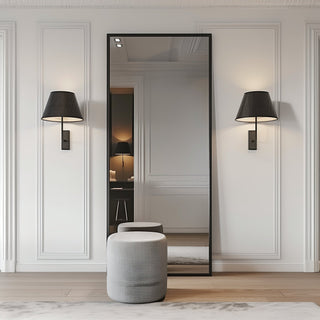
The 180cm leaning floor mirror is New Zealand's quiet standard. It fits a 2.4 metre ceiling without crowding it, gives you a head to toe view at a comfortable viewing distance, and when anchored properly meets the AS/NZS 1170 intent for tall objects that could topple in a quake. This is a buying playbook for the floor mirror NZ shoppers actually search for: the size that works, the anchoring that keeps it safe, and three frames worth the spend.
- 180cm × 70 to 80cm is the sweet spot for most NZ rooms with 2.4m ceilings — you see your full outfit without the mirror looming.
- Every leaning floor mirror should be anchored to the wall with a strap or bracket. The AS/NZS 1170 seismic intent applies to anything tall and tippable, including mirrors.
- Match the base to the floor — rubber feet for timber and tile, felt pads for polished concrete, never bare metal on rimu or oak.
What is a floor mirror in NZ — and why does the leaning version dominate?
A floor mirror, in the way New Zealanders search for it, is a freestanding full length mirror that rests on the floor and leans gently against a wall. The format wins here for three reasons. First, NZ rental stock is enormous — Tenancy Services data puts roughly a third of households in rental accommodation, and most rentals discourage drilling new holes for a wall mount. Second, our standard ceiling height is 2.4 metres, which means a leaning mirror visually finishes the wall without hitting cornice or skirting. Third, modern Kiwi homes mix hard timber floors with plaster walls, and a leaning mirror lets you sidestep the fixing problem entirely.
The flat mounted alternative still has its place. It bolts to studs, does not move, and recovers floor space. But for the typical Auckland apartment, Wellington terrace, or Christchurch villa rebuild, the leaning floor mirror is what people actually buy.
Why is 180cm the standard size?
Three numbers explain it.
- 2.4m ceiling. Standard NZ residential. A 180cm mirror leaves about 60cm of breathing room above the top edge — enough so it does not crowd the ceiling line, but tall enough to read as a feature.
- 1.5m viewing distance. Most bedrooms and dressing corners give you about 1.2 to 2 metres back from the mirror. A 180cm mirror fills your field of view from shoes to crown without cropping, even at the closer end.
- Average adult height. The NZ adult median sits around 170 to 175cm. A 180cm mirror gives you a 5 to 10cm margin above your head — useful when you check posture or step back to see a full outfit.
Go shorter (160cm) if you are styling a smaller bedroom, hallway, or rental with tight floor space. Go taller (200cm) if your room has 2.7m or 3m raked ceilings and the wall demands more visual weight. We sell both, and we get asked the question often enough that we have built it into our mirror size calculator so you can match height to ceiling and viewing distance in under a minute.
How do I keep a leaning floor mirror safe in an earthquake?

This is the question most NZ shoppers do not ask until after delivery, and it is the one that matters most. AS/NZS 1170 — the joint Australian and New Zealand structural design standard — sets seismic actions for buildings, but the underlying intent (that tall, heavy, tippable objects should be restrained) carries through to fitout items including mirrors. Anchoring is not a nice to have. It is the same logic that holds bookshelves, tall cabinets, and wardrobes to the wall.
Three anchoring methods, in order of how often we recommend them:
- Anti tip strap (default). A short steel cable or webbing strap fixed to the back of the mirror at one end and to the wall stud (not the plaster) at the other. Hidden behind the mirror, takes 10 minutes with a stud finder, drill, and two screws.
- Wall bracket at the top rail. A small L bracket that catches the upper edge of the frame. Used on heavier 200cm mirrors where strap tension alone is not enough.
- Floor cleat. A timber batten screwed flat to the floor behind the mirror's base, stopping the foot from sliding outward. Pairs with a strap, does not replace it.
For renters: the standard anti tip strap uses two screws into a stud — a hole the size of a thumbtack, easily filled at move out. We have yet to meet a landlord who has an issue with safety anchoring. If yours does, swap the strap for a free standing weighted base option (some of our wider mirrors carry an optional ballast plate).
Auckland and Wellington shoppers should treat anchoring as non negotiable. Christchurch shoppers already know why.
What size, frame, and base should I choose?
Size by room
| Room | Ceiling | Mirror height | Mirror width |
|---|---|---|---|
| Studio / hallway | 2.4m | 160cm | 60cm |
| Standard bedroom | 2.4m | 180cm | 70 to 80cm |
| Master / open plan | 2.7m+ | 200cm | 100cm |
| Walk in robe | 2.4m | 180cm | 80cm |
Frame
Three options dominate the NZ market.
- Slim aluminium (matte black or champagne). 25 to 35mm profile, modern, suits coastal modern and minimal interiors. Our most asked for finish.
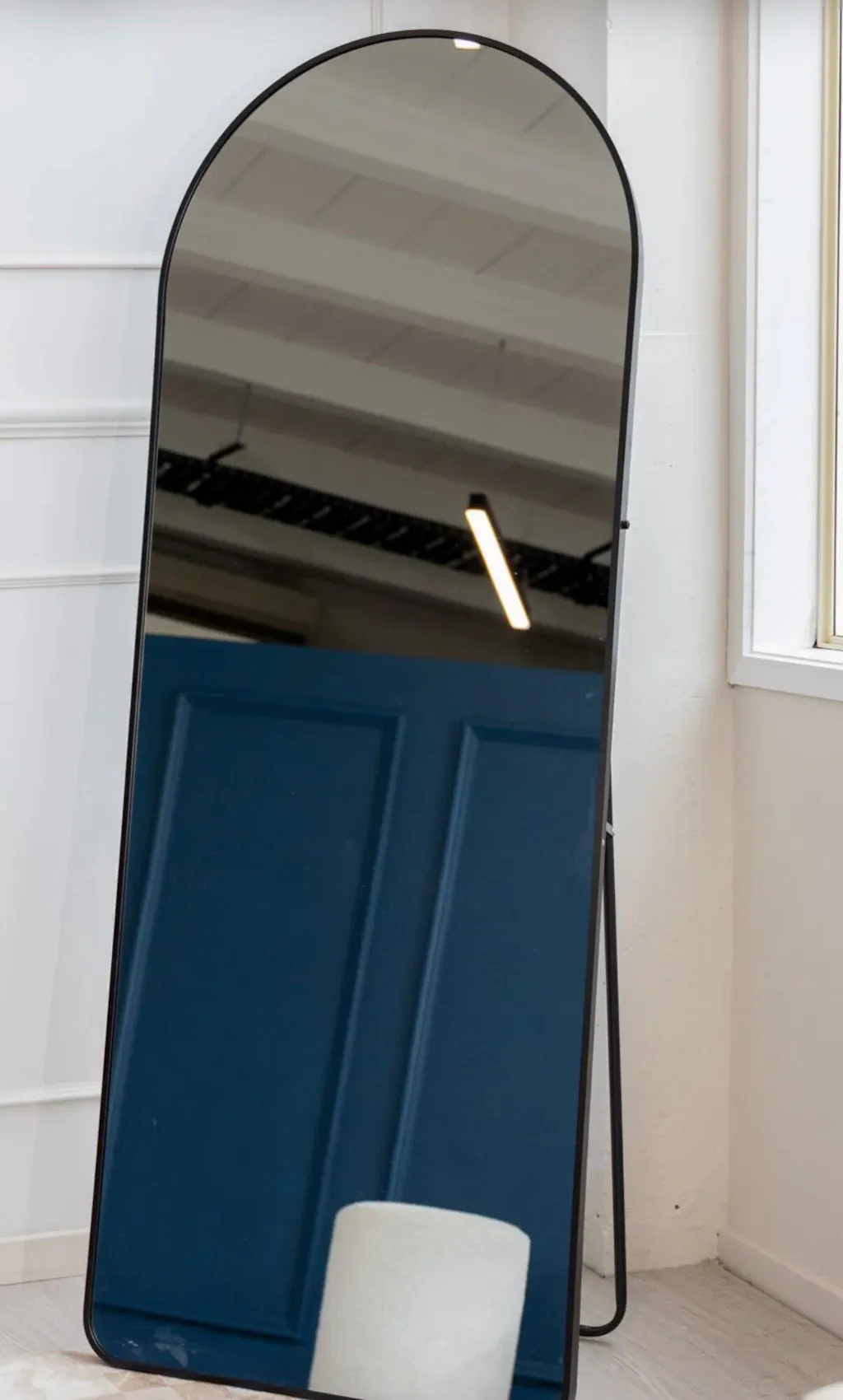
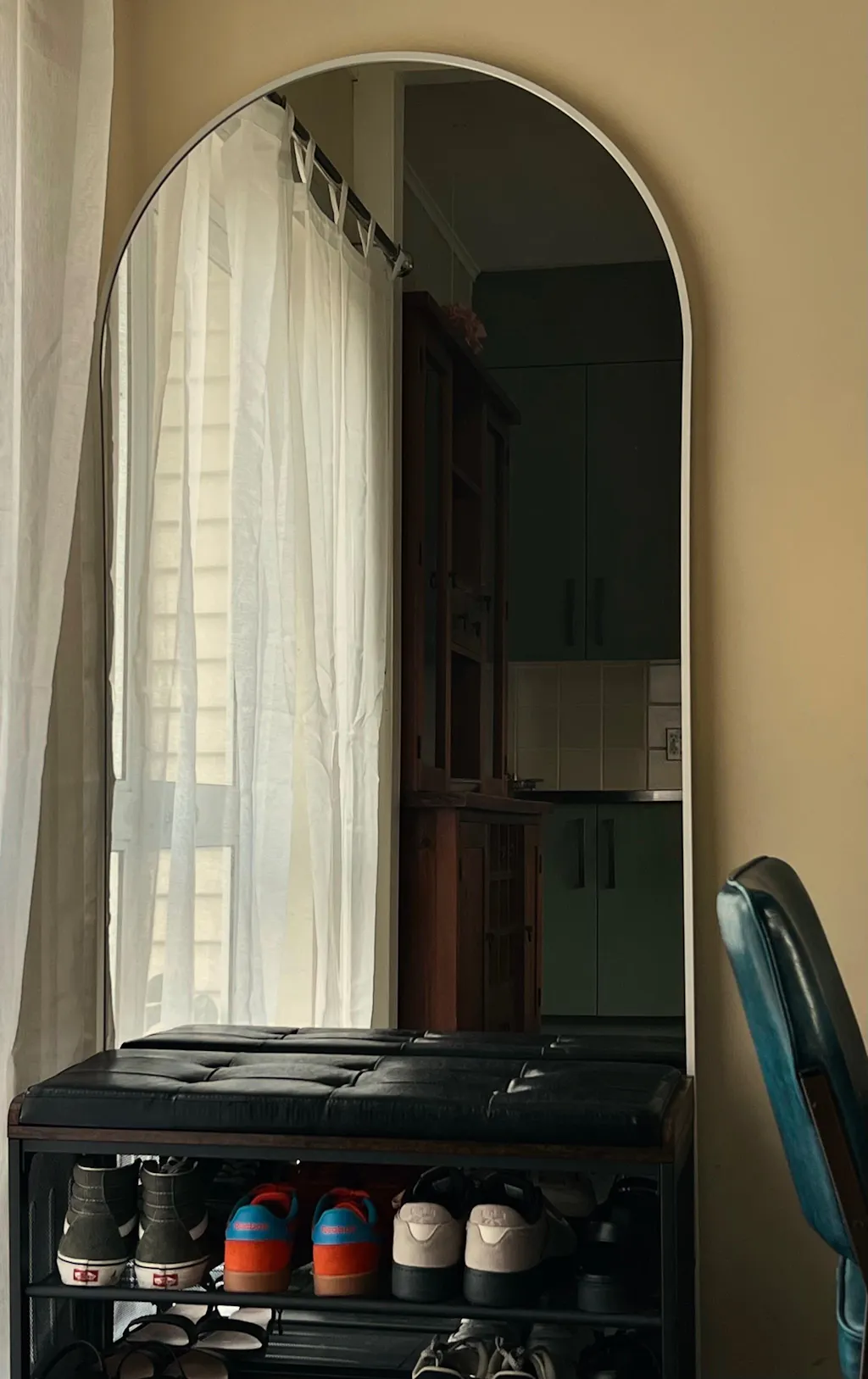
- Arched aluminium. Same slim profile, gentle arched top. Softens a square room, reads slightly more decorative.
- Frameless polished edge. Cleanest possible look. Tougher to lean (the edge is more vulnerable to chips) and harder to anchor neatly. We recommend it only for guaranteed stable installs.
Base + foot
Match the foot to the floor. Bare aluminium foot on rimu or oak will mark the timber under load — every time. Our floor mirrors ship with rubber pads pre fitted. For polished concrete or tile, swap to felt or self adhesive cork. For carpet, pad the foot with a thin rubber gasket so it does not sink and tilt the mirror over weeks.
How does a 200cm floor mirror change a room?

The jump from 180cm to 200cm is bigger than the 20cm number suggests. A 200cm floor mirror in a room with a 2.7m or 3m ceiling reads as architecture, not furniture — it doubles the perceived width of a wall, bounces a window's worth of light back into the room, and visually lifts the whole space. We see this most often in newer builds and renovations across Auckland's North Shore, Wellington's eastern suburbs, and Christchurch rebuild homes where ceilings tend to be 2.55 to 2.7m as standard.
Two cautions for the 200cm size. It needs a stronger anchor (we ship with a heavier duty strap). And it ships in a larger crate, so check that your delivery access can take it. Mainfreight handles the urban delivery on these comfortably, but a long driveway or narrow apartment lift can complicate things — flag it at checkout if either applies.
Where should I put a leaning floor mirror in a NZ home?

- Bedroom corner. The default. Place it on the wall opposite (or adjacent to) a window so daylight bounces into the room. Avoid leaning against the window wall itself — backlight kills the reflection.
- Hallway or entry. Choose a 60 to 70cm wide model so it does not crowd the walkway. Good for last look before leaving.
- Walk in robe. 180×80cm leaning at the end of the run. Better than a wall mount because you can shift it to check different outfits.
- Living room corner. A 200cm mirror in a quiet corner doubles the sense of space and bounces light back into the room. Works especially well in coastal Auckland and Wellington homes where window placement leaves one corner darker.
- What to avoid. Behind a door (gets bumped), opposite a south facing window (cold reflection, no light gain), and at the foot of a bed if you are sensitive to seeing your own movement at night.
Our full placement guide goes deeper room by room.
Three floor mirrors worth buying
From our own range, the formats most often chosen by NZ buyers, all three with the leaning standard sorted out properly. 4.94 stars from 195+ reviews. Afterpay available at checkout. NZ wide delivery via Mainfreight at live rates calculated at checkout.


Looking to go bigger? The Grandeur X Arched 200×100cm is the same archetype scaled to suit 2.7m ceilings, $485 (was $595).
See every floor mirror in the NZ collection
Browse the full floor mirror range — every model 5mm low iron glass, sealed backing, designed for NZ homes and Mainfreight delivery.
Shop Floor Mirrors Use the Size CalculatorIf you want to keep reading, the broader 2026 full length mirror buying guide covers every format (mounted, leaning, freestanding) at every size. The freestanding vs wall mounted comparison is here: freestanding vs wall mounted full length mirror NZ. And our taxonomy explainer on full length, freestanding, and floor length mirrors covers what each label actually means at the buying stage.
Frequently asked questions
What is the difference between a floor mirror, freestanding mirror, and full length mirror?
A full length mirror describes any mirror tall enough to show a full body, mounted or freestanding. A freestanding mirror stands on its own. A floor mirror specifically rests on the floor, usually leaning. In NZ buying language, floor mirror almost always means the leaning archetype, around 180cm tall by 70 to 80cm wide.
Is 180cm too tall for a 2.4m ceiling?
No, it is the sweet spot. A 180cm mirror leaning at the standard 5 degree angle has its top edge sitting around 175cm off the floor, leaving 65cm of breathing room before the ceiling. It looks intentional, not cramped.
Do I really need to anchor a leaning floor mirror to the wall in NZ?
Yes. Mirrors over 1.5m and 15kg can topple under everyday knocks before you even consider seismic events. Anchoring takes ten minutes and one bracket. AS/NZS 1170 sets the standard for restraining tall objects in NZ buildings. While not legally required for residential furniture, it is the rule of thumb every Christchurch household adopted after 2011, and one Auckland and Wellington shoppers should follow too.
Does a leaning mirror distort the reflection?
Only if the lean is excessive (more than about 8 degrees off vertical) or the glass is low grade. A 5 degree resting angle and 4mm or 5mm float glass reflect cleanly. Quality 180cm leaning floor mirrors use 5mm glass on a sealed backing for exactly this reason. Our standalone mirror distortion guide covers the optics in detail.
Is arched or rectangular better for a floor mirror?
Arched softens a square room and adds a decorative note. It suits hallways, entries, and traditional bedrooms. Rectangular is cleaner, more contemporary, and reads as architectural. It suits modern bedrooms, walk in robes, and open plan corners. Both are equally functional. Pick on style, not performance.
How is a floor mirror delivered in NZ?
Ours ship NZ wide via Mainfreight, with live rates calculated at checkout. The mirror is crated, foam corner protected, and delivered to your door, not roadside. Afterpay is available at checkout if you would rather split the cost over four payments. We have earned 4.94 stars across 195+ reviews keeping that delivery experience tight.
Final word
The 180cm leaning floor mirror works because it matches the way NZ homes are actually built — 2.4m ceilings, timber floors, and a strong preference for non permanent fixings. Get the size right, anchor it properly, match the base to your floor, and pick the frame that suits your room. The rest is just style.
Written by the C&F Creation Team. C&F Creation is an NZ Owned mirror and lighting business. Mirrors are NZ designed, built with 5mm low iron glass and sealed backings, and shipped NZ wide via Mainfreight at live rates calculated at checkout. Afterpay available.