Listen to this guide

If you rent in NZ, the ceiling light in your lounge is almost certainly wrong for the room. It is too cold, too central, and on a switch beside the door rather than next to the sofa. The cheapest fix is not asking the landlord to replace the fitting (they will not) and not drilling a wall sconce (your bond would not survive). It is a freestanding floor lamp that plugs into the wall, sits on its own base, comes with you when you move, and never asks anyone for permission. After three years of selling lamps to flatmates in Mt Eden, Newtown, Riccarton and Dunedin North, here is the shortlist we actually give renters when they ask, and the four things we tell them to check before paying for any lamp.
Key takeaways
- No drill, no anchors, no shelves. A floor lamp plugs into a power point and stands on its own base. The Tenancy Services NZ guidance lets you use any plug in appliance without telling your landlord — drilling a hole is a different story.
- Weight matters. Every C&F Creation floor lamp is 7kg packed. That is light enough to carry up a flight of villa stairs and small enough to fit in the back of a friend with a hatchback.
- Footprint matters more. A 30sqm flat does not have room for both a side table and a floor lamp. Pick a lamp with a built in tray (Slate) and you have just bought two pieces of furniture for $48.
- E27 socket is the standard. Every lamp in our range uses the regular Edison screw bulb you can buy at any New World, Mitre 10 or Bunnings — no proprietary fittings, no LED panels glued in.
- Bond friendly. Nothing on the wall, nothing in the ceiling, nothing screwed into the floor. When you flat swap in 12 months the lamp comes with you, the wall is exactly as you found it.
The renter floor lamp framework — four things to check before paying
We get the same four questions from renters every week. Below is the shortlist we ask back, in the order we ask it. Run through these four before you pay for any lamp, ours or anyone else.
1. Does it need anything fixed to the wall, ceiling or floor?
If the answer is yes, the lamp is wrong for a rental. Track lighting, plaster mounted sconces, ceiling rose swaps, anything described as a pendant — they all need a hole somewhere, and Tenancy Services NZ is clear that any alteration to the structure of the property needs your landlord written permission. The penalty for a refused wall hole is usually 30 to 80 dollars off your bond per hole, and Trade Me Property tenancy disputes are full of these. A freestanding floor lamp avoids the question entirely. It plugs into the same wall outlet your phone charger uses. The landlord cannot complain because nothing has changed.
2. How heavy is it, and does it come apart?
The average NZ renter moves every 18 months according to Tenancy Services data, and most flat moves involve at least one staircase. A floor lamp that ships in two or three flat pack pieces is much easier to move than a lamp that arrives pre assembled at full height. Every C&F lamp ships at 7kg packed, in a single carton no taller than 145cm, with the pole in two sections and the shade unscrewed. It comes apart in about 90 seconds and goes back together in about three minutes. If the lamp you are buying does not list shipping dimensions or weight, that is the answer.
3. What socket and bulb does it take?
Almost every floor lamp sold in NZ uses one of two screw fittings. E27 is the standard Edison screw — the larger 27mm thread, what most people picture when they think of a regular bulb. E14 is the smaller candle screw used for chandelier styles. Both are available everywhere in NZ. What you want to avoid is a lamp with an integrated LED panel — these look modern and last about three years before the diodes drift, at which point the whole lamp is rubbish because the panel is not user replaceable. A standard E27 socket means you can swap a 9 watt warm white LED for a 6 watt dimmable WarmGlow whenever you change rooms, and at the end of the bulb life you swap the bulb, not the lamp.
4. Will it fit a small flat?
The 30 to 60sqm one bedroom or studio flat is the dominant Auckland and Wellington rental size. The lamps that work in that footprint are the ones that share their floor space with another piece of furniture, or that sit in the corner you cannot use anyway. A tray lamp like the Slate becomes the side table. A tripod lamp like the Vanta tucks behind a chair leg. A loft lamp like the Madox arches over a sofa from the back, so the floor space under the shade is still walkable. A wide marble base lamp is gorgeous and wrong for a 30sqm flat — it eats the same square metre your laundry basket needs.
Moving day — what survives a flat to flat move

The lamps that survive five flat moves and the lamps that get dumped on a verge after two have a few clear differences. Three things are worth checking before you commit.
The shade material. Fabric drums in plain linen weave (the Madox, the Vanta) survive a tip over and a squash inside a moving box. Fluted glass globes (the Solara) survive too if you wrap them in a tea towel and pack them between two pillows — the ribbed glass is thicker than it looks. What does not survive is anything paper, rice paper, or thin plastic. We have replaced three landlord owned paper shade lamps for ex tenants who thought they were doing the right thing.
The base material. Powder coated steel disc bases (Slate, Madox) and brass disc bases (Solara) handle being slid across a hardwood floor without scratching it. Marble bases are heavier and chip on the corners. If you are renting and worried about the bond, the steel and brass discs are the safer pick.
The cord. A standard 2 metre cord from a single inline foot switch is the renter standard. Anything longer is a trip hazard in a small room. Anything shorter and you end up using a multibox to reach a wall outlet, which most flat insurance policies will note as a fire risk if it ever matters. Check the cord length on the product page before you commit. Every C&F lamp is 2m as stock with a NZ standard three pin (Type I) plug fitted before it ships.
The single bedroom — making one lamp do the whole room

Most NZ rental bedrooms have one of two lighting situations: a single bayonet pendant in the middle of the ceiling that nobody likes, or no overhead light at all (more common in older Wellington and Dunedin villa conversions where the room used to be a sleep out). For both situations the answer is the same — a single tripod or post style floor lamp in the corner, doing the whole room.
The tripod is our pick here for two reasons. First, the three legs distribute the weight of the lamp body across a wider footprint, which means the lamp does not wobble on the slightly uneven floors most older NZ rentals have. Second, the tripod does not need to be against a wall — it stands stable in any corner, including the awkward one most Kiwi rental bedrooms have where the wardrobe, the door swing and the window all meet. Pair the Vanta with a 9 watt 2700K warm white LED and the room reads as one warm pool of light, soft enough to sleep under and bright enough to read by.
For the Kelvin question itself — what colour the bulb should be — see our companion piece, the warm vs cool floor lamp bulb guide. Short answer for a bedroom is 2700K, no exceptions.
The shared flat lounge — when one lamp serves three flatmates

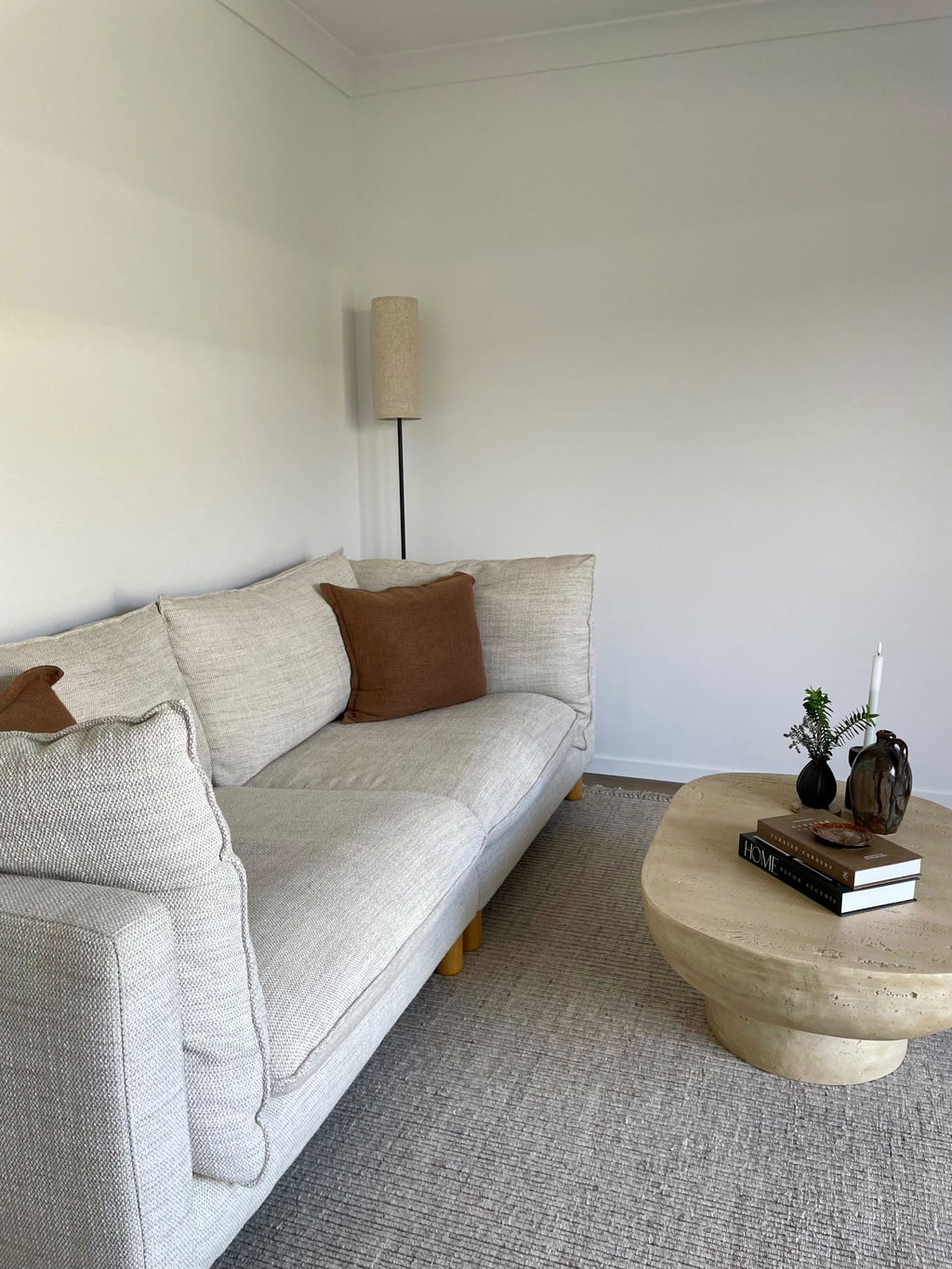
The shared flat lounge is where lighting decisions get political. One flatmate wants their dining setup brighter for cooking. Another wants the sofa side dimmer for evenings. A third does not care but uses the room for video calls and would prefer not to be backlit. The lamp that solves this in our experience is a single ambient piece in the corner away from everyone — the Solara fluted lantern is our go to. The fluted glass diffuses the bulb in a way that softens the whole room rather than spotlighting any one corner. Set it on a 6 watt 2700K bulb (about 450 lumens) and it adds warmth without competing with the overhead light when someone needs the overhead on. Set it on a 9 watt 2700K bulb and it can be the only light in the room after dark.
The other shared flat reality: nobody owns the lamp. When the original buyer moves out, the lamp usually goes with them, and the next flatmate buys their own. Picking a lamp at the $48 to $88 price tier (rather than the $200+ designer lamps you see in Trade Me) keeps the original investment small enough that flat swaps do not feel like a financial event.
Three picks under $100 — what we actually recommend
The full freestanding floor lamp range is at our floor lamp collection. Below is the renter shortlist — three lamps under $100, picked for the four checks we run through above.


If your shared lounge is bigger than 4 by 5 metres or you want one lamp to anchor the room as a piece of design rather than a piece of furniture, the Solara Fluted Lantern Floor Lamp at $98 is the upgrade pick. The fluted glass globe is the only lamp in the range that doubles as a sculptural element when it is switched off, which matters when the lamp is on for two hours an evening and visible the rest of the day.
Tenancy NZ — what your landlord can and cannot stop you doing
The Residential Tenancies Act 1986 (Section 40) is explicit on this. As a tenant you are entitled to use any portable plug in appliance without your landlord permission, including lamps, heaters, fans, and chargers — provided the appliance has a NZ compliant three pin plug, has not been modified, and does not draw more than the circuit rating. A 9 watt to 12 watt LED floor lamp draws about 80 milliamps. The standard NZ residential circuit is 16 amps. You are not even close to the limit.
What your landlord can stop you doing: drilling holes, swapping the ceiling rose, hardwiring a fitting, mounting a sconce. Anything that touches the structure or the existing wiring needs written permission and an electrician for the wiring side. The whole point of a freestanding floor lamp is that it sidesteps all of this. The lamp is your property, the wall is theirs, and at the end of the lease the lamp leaves with you and the wall is exactly as you found it.
External reference: the Tenancy Services NZ official guidance on tenant alterations is at tenancy.govt.nz/changes-to-the-property. Bookmark it before your next flat inspection.
Shipping and what arrives at your door
Floor lamps from C&F Creation ship NZ wide via NZ Post Courier at live rates calculated at checkout — the rate adjusts for your suburb (same island vs inter island, urban vs rural) so a courier from our distribution centre to a Wellington flat reads differently from the rate to a Karamea farm. Each lamp ships in a single carton at 7kg, designed in NZ and finished offshore at our factory before being forwarded through to your door. Mirrors ship NZ wide via Mainfreight at live rates on the same checkout. Afterpay is available across the range if you would rather split the cost over four interest free payments. C&F Creation runs at 4.9 stars across 200+ verified reviews and the freestanding floor lamps sit at the centre of that average.
See the full floor lamp range
Eleven freestanding floor lamps under $200, picked for NZ flat sized rooms, 2.4m ceilings, and standard E27 bulbs. Designed in NZ, shipped NZ wide via NZ Post.
Shop Floor Lamps Browse MirrorsIf you want the rest of the floor lamp library, our honest lighting buyer guide covers picking the body itself, the 2.4m ceiling sizing rule covers how tall the lamp should be for your room, the placement guide covers where it should sit, and the Kelvin bulb guide covers what to put inside. Read the four together and the rental decision is mostly already made.
Frequently asked questions
Can my landlord stop me using a floor lamp in my rental?
No. Under the Residential Tenancies Act 1986 a NZ tenant is entitled to use any portable plug in appliance with a NZ compliant three pin plug, including floor lamps, without telling the landlord. Your landlord can only stop you altering the property — drilling, hardwiring, swapping fittings. A freestanding floor lamp does none of those, so the question does not apply. The Tenancy Services NZ guidance on changes to the property covers the boundary in plain terms.
Will a floor lamp survive a flat move?
Yes, if it ships in pieces. Every C&F Creation floor lamp arrives in a single 7kg flat pack carton with the pole in two sections and the shade unscrewed from the body. Reassembly takes about three minutes. Disassembly for a flat move takes about 90 seconds. Fabric drum shades and brass or steel disc bases handle being packed in a moving box. Avoid lamps with paper or rice paper shades, marble bases (chip on corners), or pre assembled bodies that ship at full height — those are the ones renters end up replacing.
What bulb does a C&F Creation floor lamp use?
Every floor lamp in the range uses a standard E27 Edison screw bulb — the regular size you can buy at New World, Mitre 10, Bunnings or any NZ supermarket. No proprietary fittings, no glued in LED panels. Our recommended pairing for a NZ rental lounge or bedroom is a 9 watt 2700K warm white LED at around 800 lumens (CRI 90 or higher). For more on Kelvin pairings see our companion guide on warm white versus cool white bulbs for floor lamps. The lamp ships without a bulb so you can pick the colour temperature that fits the room.
Which floor lamp is best for a small NZ flat under 50 square metres?
For a flat under 50sqm we recommend the Slate Tray Floor Lamp at $48. The built in side tray means the lamp doubles as a side table, which is the single best space saving move in a small flat — you have just bought two pieces of furniture for one footprint. For a bedroom corner the Chandelle Linen Column ($68) stands on a 20cm base and slots into awkward corners. For a lounge with limited floor space behind the sofa, the Orsay Gold Arc ($158) arches its shade out over the sofa from a single base, leaving the floor under the shade walkable.
Do I need an electrician to set up a floor lamp in NZ?
No. A NZ compliant floor lamp is a plug in appliance — it ships with a fitted NZ three pin (Type I) plug already attached at the cord. You unbox it, screw the pole and shade together, plug it into a wall outlet, and screw a bulb in. No electrician, no inspection, no permission required. The lamp draws around 80 milliamps at 9 watts, well below the 16 amp rating of any standard NZ residential circuit. The Energy Efficiency and Conservation Authority NZ recommends LED for any new lamp purchase for the running cost reason.
How is a C&F Creation floor lamp shipped in NZ?
Floor lamps ship NZ wide via NZ Post Courier at live rates calculated at checkout — the price adjusts for your suburb, urban or rural, North or South Island. Each lamp ships in a single 7kg carton, designed in NZ and finished offshore at our factory before being dispatched. Mirrors ship NZ wide via Mainfreight at live rates on the same checkout. Afterpay is available if you would rather split the cost over four interest free payments. C&F Creation has 4.9 stars across 200+ verified reviews keeping that experience consistent.
Final word
A renter who buys a freestanding floor lamp has solved four problems at once: the inadequate ceiling light, the missing side table, the bond risk of drilling, and the next flat move when the lamp comes too. None of the four needed a landlord conversation. The cheapest version of this is $48 and arrives in a single carton at 7kg. The version that doubles as a piece of design is $88. We have not found a renter situation in three years where the answer was anything more complicated than that.
Written by the C&F Creation Team. C&F Creation is a NZ owned mirror and lighting business. Floor lamps are designed in NZ, finished offshore at our factory, and shipped NZ wide via NZ Post Courier at live rates. Mirrors ship NZ wide via Mainfreight at live rates. Afterpay available across the range. 4.9 stars across 200+ verified reviews.