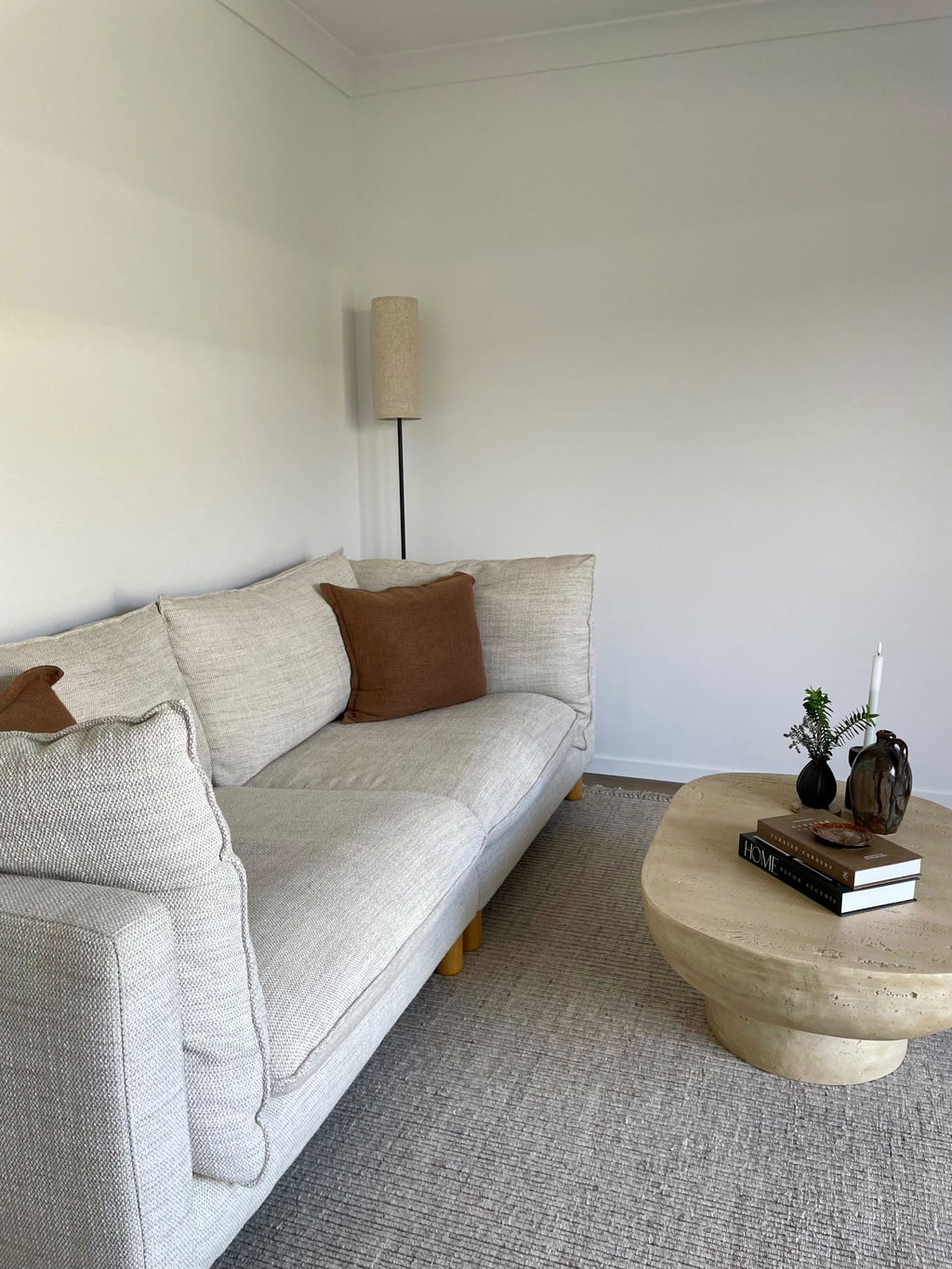
Search for a floor lamp in New Zealand and you hit the same fork within five minutes: The Warehouse has one for the price of a takeaway night, and everything else seems to cost three to ten times more. So is the cheap one a false economy, or is everyone else just charging for a logo? We sell lamps ourselves, so we have skin in this game, and this is still the honest version of the answer: sometimes the Warehouse lamp is genuinely the right call.

The short answer
A floor lamp from The Warehouse, roughly $20 to $120 at the time of writing, will light a room and is a fair buy for a flat, a spare room or a first home setup. What it usually gives up is the stuff you live with daily: shade fabric that flatters the light, a base with real weight, warm bulb guidance, and a design you would keep past the next flat move. The step that changes the most costs less than people think. Between about $48 and $180 you reach lamps designed as furniture rather than as a light on a stick, and that is the tier most NZ lounges actually need. The $200 plus designer tier is real, but it is buying a name and a statement, not more light.
The three floor lamp tiers in NZ
| Tier | Typical price | What you get | Watch for | Best for |
|---|---|---|---|---|
|
Budget retail The Warehouse, Kmart |
~$20–$120 | A working lamp today, in store, no freight wait. Simple stick or tripod designs. | Lightweight bases that tip on carpet, thin shades that glare, cool white bulbs often bundled | Flats, spare rooms, short term setups |
|
Mid tier where our new range sits |
~$48–$180 | Design led shapes (gold arcs, rattan weaves, linen drums, three light cages), weighted bases, warm light guidance | The new designs are in stock right now; clearance lines move fast | The lounge you sit in every night |
|
Designer Freedom, Nood, lighting stores |
$200–$1,000+ | Name designs, statement scale, showroom finishes | You are paying for design pedigree; the light itself is no warmer | A hero piece in a room built around it |
What you actually get with a Warehouse floor lamp
Credit where it is due. The Warehouse does the job it sets out to do: a lamp you can put in the trolley on a Tuesday and have running that night. If you are furnishing a flat, waiting out a rental, or lighting a spare room that gets used twice a month, that is a completely rational buy and we are not going to pretend otherwise.
The trade offs are predictable because they are where the cost comes out. Budget lamps commonly ship with lighter bases, and a floor lamp lives or dies on its base; a lamp that wobbles when the kids run past never stops annoying you. Shades tend to be thinner fabric or plastic diffusers, which read as glare at seated eye level rather than glow. Styles are generic by design, made to offend nobody. And the bundled or recommended bulb is often cool white, which is the single most common reason a new lamp makes a lounge feel like a dentist's waiting room. If you do buy budget, our one strong tip is free: fit a 2700K warm white bulb, and the lamp will punch above its price.
What changes between $48 and $180
This is the tier where the difference is a design decision, not a marketing one. Around this price a lamp starts being built as a piece of furniture: the base gains real weight, the shade becomes linen, woven texture or fluted glass that turns the bulb into soft light, and the shapes start doing jobs, an arc that reaches over the sofa, three switched globes in a dark corner, a column that fits the spot nothing else fits. For transparency, this is where our own range lives, and our just released 2026 designs are the clearest picture of what the tier buys, so judge the argument on the lamps.

Orsay Gold Arc — the pendant look without the electrician
$158 $399
Hanging light over a couch usually means an electrician, a ceiling rose and a patch job on the gib. Orsay gets there with a plug: a slim gold pole that climbs to 173cm, curves out over the cushions and parks a brushed gold dome right where a pendant would hang. This is the exact silhouette the $400 plus lighting stores trade on. In stock now. See the Orsay.

Rousseau Rattan Weave — the texture the big box aisle cannot do
$109 $249
The shade does two jobs: an open zig zag weave of twisted paper rope in warm tan on the outside, the rattan look without any cane, and a white linen drum inside that keeps the light soft instead of stripy. Texture is exactly what a moulded budget shade cannot fake, which makes Rousseau the clearest visual argument for the tier. In stock now. See the Rousseau.

Chandelle Linen Column — the new range's $68 front door
$68 $149
Every home has a spot that stays dark because nothing fits there: the gap beside the dresser, the hallway corner, the sliver of wall behind the door. Chandelle is a weighted disc base and a slim linen column made for exactly those spots, and at $68 it sits inside Warehouse pricing while being unmistakably a designed object. In stock now. See the Chandelle.
The rest of the 2026 range fills out the same tier: the Voltaire puts three caged globes on one stand for $158, the Solara shows the bulb through fluted glass on a brushed brass stem at $98, the Aurelia does quiet mid-century with a brass gooseneck and pleated shade at $98, and the Cosmo is the loud one, polished chrome arc off a solid black marble base at $178. All are in stock now.
Alongside the new range, our clearance lines are $48: the Slate Tray ($48, built in tray table) and the Lumen Duo ($48, main shade plus a separately switched reading arm). They are the outgoing generation, priced accordingly, and the under $200 shortlist ranks them properly.
When a $200 plus designer lamp is worth it
Genuinely worth it: when the lamp is the room's hero piece and you want a recognised design, an oversized statement scale, or a finish like marble and brass done at showroom grade. Design stores like Freedom and Nood do beautiful work at $300 to $1,000 and beyond, and if a specific piece has your heart, buy it, a lamp you love is never a bad purchase.
Not worth it: buying the tier out of fear that anything cheaper is junk. The light from a $600 lamp is not warmer, brighter or kinder than the light from a $98 one wearing the same 2700K bulb. And the gap keeps narrowing: a gold arc or a chrome and marble base, the finishes that used to define the $400 plus bracket, now exist in our range at $158 and $178. Past about $180 you are paying for design provenance, which is a legitimate thing to pay for, as long as you know that is what is on the receipt.
Room by room verdict
The lounge you use every night: mid tier. This is the lamp you look at more than any other object in the house; base weight, shade fabric and warm light earn their money daily. The Orsay over the sofa or the Rousseau beside it are the two range picks here.
A rental or first flat: budget is defensible, but note the new range opens at $68 with the Chandelle, inside Warehouse pricing for a designed piece with a weighted base. If it may move houses with you, mid tier survives the move better. Our living room lamp guide covers placement once it arrives.
A reading corner: mid tier, specifically something that puts light over the chair rather than beside it, an arc like the Orsay, or see the floor reading lamp test for the ship today options. Budget stick lamps light the room, not the page.
Spare room or garage office: The Warehouse, honestly. Swap the bulb to warm white and spend the difference on the rooms you live in.
Who should pick which
Pick The Warehouse if you need light tonight, the room is low stakes, or the budget genuinely stops at $40. No shame in it, just fit a warm bulb.
Pick the $48 to $180 tier if the lamp is for the room where you actually spend your evenings, you want a shape that does a job (arc, three lights, column for the awkward corner), or you want the designer look without the designer price. The 2026 range is the definitive version of the argument; the clearance lines cover ship today budgets.
Pick the $200 plus tier if a named design or statement scale matters to the room, and you are buying with your eyes open about what the extra spend buys.
Final verdict
The Warehouse floor lamp is not a trap, it is a tool, and for short term rooms it is the right tool. But the gap between it and a lamp designed as furniture is currently the smallest it has ever been in NZ: our 2026 range puts gold arcs, rattan weaves, fluted glass and chrome on marble at $68 to $178, launch priced against compare at prices of $149 to $399. For the lounge you sit in every night, that mid tier is the verdict, and it is not close. If you want the full how to choose logic before picking a shape, the complete floor lamp guide walks the whole decision.
Frequently asked questions
Are Warehouse floor lamps any good?
For the price, yes, they light a room and they are available today, which matters. The common trade offs are lighter bases, thinner shades that can glare, and cool white bulbs. For a flat or spare room they are a fair buy; for the lounge you use nightly, a mid tier lamp around $48 to $180 is a better long term call.
How much should I spend on a floor lamp in NZ?
For a room you use every day, $48 to $180 buys a lamp built as furniture: weighted base, fabric or glass shade, warm light, and shapes that do jobs like arcs and multi light stands. Under $50 makes sense for short term rooms; over $200 you are mostly paying for design pedigree rather than better light.
What is the difference between a $30 floor lamp and a $100 one?
Mostly the parts you touch and live with: base weight so it does not wobble, shade material that glows instead of glares, switch quality, and design shapes like arcs, woven shades and caged multi light stands. The bulb decides light colour in both cases, which is why a warm 2700K bulb is the best upgrade either lamp can get.
Why does my new floor lamp make the room feel cold?
Almost always the bulb, not the lamp. Cool white bulbs (4000K and up) read as clinical in a lounge. Swap to warm white, 2700K, and the same lamp turns golden in the evening. Budget lamps often come bundled with cool white bulbs, which is where the reputation comes from.
When does the new C&F floor lamp range arrive?
The 2026 range, Orsay, Voltaire, Rousseau, Marceau, Chandelle, Cosmo, Solara and Aurelia, is in stock now, and each product page shows live stock.
Can I see the lamps in person before buying?
Yes. Our Auckland showroom at Unit B, 19 Arrenway Drive, Rosedale is open 7 days, with the lamp range on display and lit, which is the fastest way to judge shade glow and base quality side by side.
Prices and stock quoted were checked the day this was published; live stock shows on each product page. Delivery on lamps is by courier NZ wide with tracking; larger pieces across our store travel with Mainfreight at live rates calculated at checkout. We are NZ owned, and the full floor lamp range shows live stock.