Listen to this guide

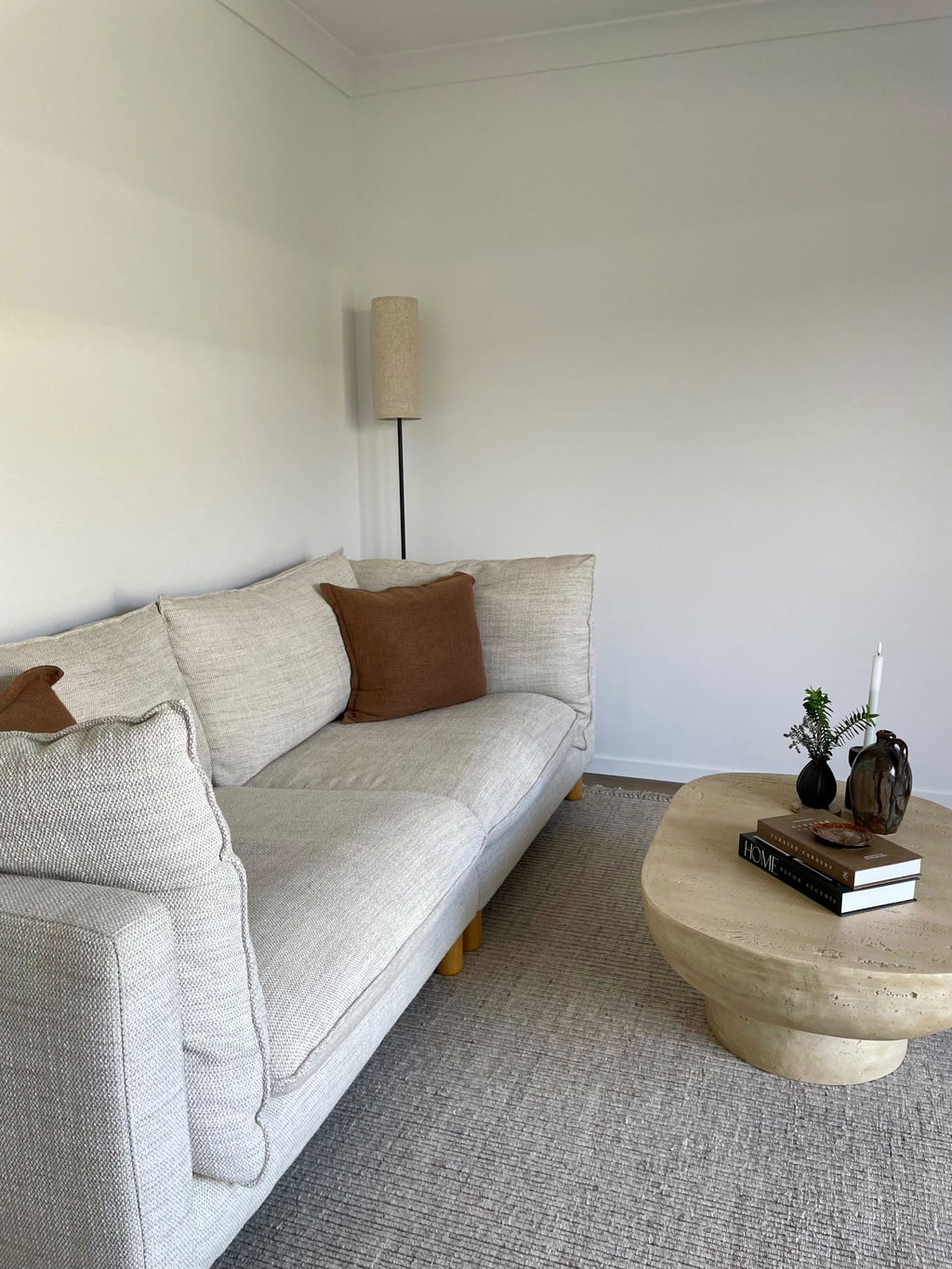
Scandinavian design is the most quietly copied and most often misunderstood interior style in New Zealand homes. Walk through any Kiwi furniture showroom in winter and you will see grey linen sofas, pale oak floors, and a single tall floor lamp standing in the corner under the promise of hygge. Most of those rooms are not Scandinavian. They are beige. Real Scandi rooms are calm because every light source has been chosen on purpose, every material has a job, and almost nothing on the wall is decorative. After three years of selling floor lamps into Kiwi flats, villas, townhouses, and one-bedroom apartments, here is what we have learned about which lamps suit the style, which ones do not, and how to think about Scandinavian lighting in a country with a 2.4m ceiling, a dark winter afternoon, and a single overhead pendant that does most of the room wrong.
Key takeaways
- Layered light, not bright light. The single biggest Scandi rule is three light points per habitable room — overhead, lamp, task. A floor lamp on its own cannot rescue a single-pendant room.
- 2700K, never 4000K. Scandinavian rooms run warm. Cool-white bulbs read clinical, fluorescent, and unfinished. Drop a 2700K warm-white globe in or do not bother.
- Material honesty. Pale timber, brushed brass, matt black metal, pleated cotton, natural linen. No chrome, no glossy plastic, no ornate filigree. The lamp should look like the wood it came from.
- Proportion under a 2.4m ceiling. A 190cm lamp crowds a typical NZ room. A 150–170cm lamp sits inside it. Read the height before you click buy.
- Function before drama. Scandinavian style is restrained. The lamp should do its job — light the corner, the book, the sofa — without asking to be photographed.
Soft shades, clean lines and warm light: the fabric and linen collection is where the Scandinavian look lives in our range.
Shop Fabric & Linen Floor LampsOr browse: All Floor Lamps
What Scandinavian actually means in a floor lamp
The word "Scandinavian" has been pulled in three different directions by Kiwi retailers. The honest version comes from the design schools of Denmark, Sweden, and Finland in the 1940s and 1950s — Poul Henningsen, Alvar Aalto, Hans Wegner — and the principle is older than any of them. A lamp in a Scandinavian home is treated as the most important piece of furniture in the room because it works the hardest. It runs from three in the afternoon through to ten at night in the long northern winter. It carries the whole emotional load of the room during the months when the sun barely shows up. So the lamp has to be quiet, warm, well-proportioned, and made of materials that age honestly. That is what we mean by Scandinavian — not the IKEA shelf at the end of aisle six, but the design discipline behind it.
In practical terms this gives you four design rules that decide whether a floor lamp is Scandi or just pretending. Rule one is layered lighting. Poul Henningsen's whole career was an argument against a single overhead light source. A Scandi room has three light points minimum — overhead pendant or ceiling light, mid-height lamp (table or floor), and task light (desk, side-table reading lamp). Adding a floor lamp to a room without changing the overhead bulb is not enough. Rule two is warm Kelvin. Scandi rooms run at 2700K, the warm-white end of the residential bulb scale, because cooler-than-2700K reads like an office or a hospital. Daylight (5000K) and cool-white (4000K) are not used in Scandinavian living rooms — the contrast against the dark winter outside is too clinical. Rule three is material honesty. The classic Scandi lamp pairs one organic material (timber, paper, cotton, linen, leather, wool) with one understated metal (brushed brass, matt black, raw steel). It avoids chrome, gold plate, glossy plastic, mirrored finishes, anything that calls attention to itself. Rule four is restrained proportion. A Scandi lamp is sized to the room it is going into, not to the ceiling height of the showroom photograph. In NZ that usually means 150–170cm tall, not 190–200cm.
The C&F four-step Scandi floor lamp diagnosis
Before you buy, run these four questions on the room. Two minutes with a measuring tape and a torch saves a return and a flat-pack of regret.
1. How many light points does the room already have?
Walk into the room at 6pm with the curtains drawn and switch on every light. Count the discrete light points. A typical NZ lounge has one overhead pendant (or worse, a recessed downlight grid that the previous owner installed in 2003). That is one point. A Scandinavian living room target is three. A floor lamp gets you to two. A table or reading lamp on the side table gets you to three. If you skip that third point you have made the room better but not Scandi. Plan the lamp purchase as the second leg of a three-light system, not the only fix.
2. What is the ceiling height — and where will the lamp stand?
Most NZ homes built between 1960 and 1995 have a 2.4m ceiling. Standard new-build apartments are 2.4 or 2.55m. Pre-1960 villas can be 2.7 to 3.0m. The floor lamp height has to relate to the ceiling and the seat height. Beside a 75cm-high sofa or armchair, the bottom of the lamp shade wants to be at or just below eye level when seated — about 130–150cm from the floor — so the bulb is not glaring at you when you sit down. That sets the total lamp height at 150–170cm for most NZ rooms. Anything taller and the lamp dominates the wall and crowds the visual ceiling line. Our sizing guide for 2.4m NZ ceilings covers the geometry in more detail.
3. Which materials are already in the room?
Scandi rooms are not free of contrast — they just keep the material vocabulary small. List what is already there. Pale oak floor + linen sofa + wool rug + ceramic side table is a Scandi material palette. A timber-stem lamp with a pleated cotton shade extends it. A chrome stem with a glass globe does not. If the room already has matt black hardware on the cabinet handles and the curtain rail, a slim matt black lamp like Chandelle or Marceau will read native. If the cabinet handles are brushed brass and the cookware sits in a brass tray, the Aurelia brass arm will read native. Pick the lamp metal to match the metal already in the room. Mixing brass and matt black inside one Scandi room is allowed and common, but pick one to lead.
4. What is the bulb going to be?
This is the question most floor lamp buyers skip and most regret. The lamp ships with a fitted lamp holder but not a bulb. The bulb decides whether the lamp reads Scandi or not. For Scandi lighting, the rule is straightforward: 2700K warm-white LED, no exceptions. 3000K is acceptable in a kitchen but reads cool in a lounge. 4000K is not Scandi anywhere — it is the colour of a public-toilet overhead and it kills the warmth that the whole rest of the room is trying to make. 5000K (daylight) is for garages and workshops, not Scandi lounges. Keep the globe at or under the lamp's rated maximum, which is listed on every product page (10W LED on most of our current lamps): a warm white LED in that range is enough to be the second light source in the room but not so bright it floods. For a deeper walk-through of what warm vs cool actually means in a floor lamp, see our bulb temperature guide.
Four C&F floor lamps that read Scandi in a NZ home
Below are the four lamps from the C&F range that earn the Scandi label honestly. Each one illustrates one of the four Scandi material moves (linen on a quiet frame, matt black minimal, brass and cotton, sculptural arc), and each is priced for a real Kiwi household.
Move 1 — Linen drum on a quiet frame (the textbook Scandi anchor)

The textbook Scandinavian floor lamp is a soft fabric shade on a frame that stays out of the way: the fabric diffuses the light and softens the shadow line, and the frame lets the shade do the talking. The Marceau Linen Drum Floor Lamp ($88) is that pairing in our current range. A beige linen drum, 30cm wide and 18cm tall, hangs from a matte black arm that leaves the pole straight and turns once over the top, setting the shade about 20cm out from the pole centre. It stands 163.5cm tall on a weighted 25cm base, so it sits inside a 2.4m NZ ceiling without crowding it, and the linen softens the light rather than dropping a hard bright pool of it. Fit a 2700K warm white LED (the lamp is rated to 10W LED), place it at the end of a linen sofa or beside a low bed, and you have the calm Scandi corner most mood boards are pointing at. The 1.8m cord runs to an inline foot switch, so it turns on without anyone getting up.

Marceau Linen Drum Floor Lamp
163.5cm, beige linen drum shade, matte black frame, 25cm weighted base. The calm Scandi anchor for the end of a sofa or beside a bed.
$88 NZD
Move 2 — Matt black and one straight line (Nordic minimalism, honest function)

Nordic minimalism is the colder cousin of Scandinavian style. It strips out the warmth of timber and leaves only the geometry. The Chandelle Linen Column Floor Lamp ($68) is the cleanest expression of that move in our range: a slim matte black pole on a weighted matte black base just 20cm across, topped by a beige linen column 16cm wide and 40cm tall that lights up as one vertical line rather than a spot. No arc, no spread, nothing to bump in the dark. It weighs 2.5kg and comes in a small carton, which matters for a renter who shifts flats every year or two. For a Scandi minimal bedroom or a hallway corner that already has too much going on, Chandelle disappears into the room until you switch it on, and the foot switch means you can still tap it on with your toe when it is tucked into a tight spot. Run a 2700K warm white LED through it (rated to 10W LED) and that line of light reads warm. For the rental angle, see our rental floor lamp guide.

Chandelle Linen Column Floor Lamp
166.8cm, slim matte black pole, beige linen column shade, 20cm weighted base. Nordic minimalism for bedrooms, hallway corners and rental flats.
$68 NZD
Move 3 — Brushed brass and pleated cotton (Scandi meets mid-century)

Scandinavian design and mid-century modern share a vocabulary — restrained shapes, honest materials, warm metals — and the overlap is most visible in the brushed-brass-and-cotton lamps Hans Wegner and his contemporaries were drawing in the 1950s. The Aurelia Pleated Fabric Floor Lamp ($98) sits in that crossover. A brass gooseneck arm curves out from a wood grain finish pole on a round 25cm brass base and tilts a pleated cream cotton shade forward. The cantilever is gentle, about 16cm from pole centre to shade centre, so Aurelia stands beside a chair or the end of a sofa rather than reaching over it, and the wood grain pole, a print on metal that reads as timber across the room, gives you the Scandi pairing of timber and cotton alongside the brass. The brass is matt-brushed rather than polished, which is the difference between Scandi-mid-century and 1980s Hollywood-Regency. Pair it with a wool rug, a sheepskin throw and a stoneware mug on the side table and the corner reads warm and calm.

Aurelia Pleated Fabric Floor Lamp
156cm, brass gooseneck arm, wood grain finish pole, pleated cream cotton shade, round brass base. The Scandi and mid century crossover to stand beside a reading chair.
$98 NZD
Move 4 — Sculptural three-arc (when the ceiling has no pendant wiring)

A surprising number of NZ rooms — particularly in 1960s and 1970s flats — have no power point in the ceiling above the lounge sofa. The room was wired for one overhead bulb at the centre, and the centre is not where the sofa sits. Hanging a pendant from a hook into a non-wired ceiling is not legal under NZ electrical regulations and asking the landlord to run a new circuit is not a battle most tenants win. The Scandi answer is the sculptural floor lamp that does the pendant's job from the floor. The Trilogy 3-Light Floor Lamp ($188) is that lamp: one matt-black metal base from which three slim arching arms rise to about 195cm and curve outward, each carrying a small matt-black drum shade. Position the base behind the sofa and the three shades hover above the seat at three different heights, casting three overlapping warm pools of light. Three light points from one piece of furniture — the Scandi layered-lighting principle delivered without a single hole in the ceiling. The supplied cord is 2.5m to reach a sensible wall socket. For routing it safely along the skirting, see our cable management guide.

Trilogy 3-Light Floor Lamp
Three matt-black arching arms, three drum shades, one base. Replaces a missing overhead pendant. 2.5m supplied cord.
$188 NZD
The Scandi NZ room — three light points, one floor lamp, warm Kelvin
Take all of the above and put it into a single room — a typical 1990s NZ lounge, 3.6m × 4.2m, 2.4m ceiling, one overhead pendant at the centre, single double-socket on the long wall, one north-facing window. Here is how the layered Scandi version of that room actually goes together.
Light point one — the overhead. Swap whatever lives in the pendant socket for a 2700K 9W LED warm-white globe. If the existing shade is a 1990s frosted-glass dome, replace it with a simple paper or pleated cotton pendant in cream or off-white. The pendant becomes the wash light, not the bright light. Dim it if you have a dimmable circuit; if not, the 9W warm-white globe at 800 lumens is the right starting point.
Light point two — the floor lamp. Place Marceau at the far end of the sofa, in the corner where the long wall meets the window wall, with the drum turned toward the seat. The linen softens the light and sets it down across the end of the sofa, lighting the seat without lighting the room. This is the light for talking with someone on the sofa. Pop in a 2700K warm white LED, no stronger than its 10W LED rating.
Light point three — task or accent. A small table lamp on the side table beside the sofa, or a ceramic-base lamp on the bookshelf opposite, or a Chandelle in the corner on the other side of the room. Whichever lands closest to where you actually sit. This is the layered third point that pushes the room past "lounge with a floor lamp added" into Scandinavian. Same bulb spec — 2700K, 7–9W, warm white.
Switch on all three at 6pm on a cold winter Wednesday. The room has gone from one harsh overhead to three soft pools of warm light. There is no single bright spot; the light layers across the seat and the floor and the wall and the bookshelf. That is hygge, that is layered Scandi lighting, and the floor lamp was the second leg of the three-light system — not the whole answer.
Three Scandi mistakes to avoid in NZ
If you have read this far, the four moves above are the positive checklist. The three mistakes below are the ones that turn an otherwise-Scandi room into something that looks like a hotel lobby in 2009.
Mistake 1 — Cool-white bulbs because they "feel modern"
A cool-white (4000K) or daylight (5000K) bulb in a Scandi floor lamp instantly kills the style. The colour temperature is the foundation rule and it cannot be skipped. If your room has an existing 4000K kitchen ceiling light on a shared circuit, leave that alone — but every lamp in the lounge, bedroom, and reading corner runs at 2700K. If the bulb you have on hand is the wrong colour, buy a 2700K LED on your next supermarket run for $5. There is no faster, cheaper Scandi upgrade.
Mistake 2 — Glossy chrome or polished-gold finishes
Scandinavian design is suspicious of reflective surfaces because they break the calm. A polished-chrome stem, a polished-gold lamp arm, or a mirrored base reflects every other surface in the room and creates visual noise where Scandi rooms want quiet. Brushed brass, matt black, and pale timber are the three correct metals. Glossy chrome belongs in a 1980s American bathroom, not a 2026 NZ Scandi lounge.
Mistake 3 — A lamp that is too tall for the ceiling
The single most common floor lamp mistake in NZ is buying a 190–200cm lamp because the showroom photo looked good in a 3m-ceiling Auckland warehouse store. Under a typical 2.4m residential ceiling that lamp looks crowded — the top of the shade is 30cm from the ceiling and the lamp visually pushes downward. A 150–170cm lamp sits inside the same room and the eye reads it as proportioned. If you already have a tall lamp and you do not want to return it, push it into a corner against two walls so the height reads against the diagonal, not the flat ceiling.
Hygge, layered lighting, and the IES principle
Scandinavian layered lighting is not a Pinterest invention. The principle was formalised by the Illuminating Engineering Society (IES) decades ago as the three-tier residential lighting model — ambient (overall room wash, usually overhead), task (focused on the activity, reading or working), and accent (highlights an object or shape, often indirect). A Scandi lounge with one overhead, one floor lamp, and one side-table lamp ticks all three categories at the same time. The IES residential guidance recommends 200–300 lux at seated eye level for general living-room activity, and a 2700K 9W LED through a translucent pleated cotton shade delivers about 150–200 lux at 1m below the shade — exactly the right band for a reading-and-talking living room. The Scandi instinct and the IES specification arrive at the same room from different directions, which is usually a good sign the principle is sound.
The Danish word hygge, which gets used and abused in NZ interior writing, is genuinely about layered light. A hygge evening is candle plus lamp plus pendant, not just candle. A Scandi floor lamp is the lamp in the middle of that three-layer stack. Pick the right one and you have done the structural lighting work for a hygge room; pick the wrong one and no number of candles will save it.
Where Scandinavian floor lamps suit which NZ rooms
Quick guide on which of the four moves above lands in which room. This is the version we give over email when a customer asks "which lamp for a small lounge in a Wellington flat with one north-facing window."
- Small lounge (under 18 m²) — Aurelia or Marceau. Both under 165cm, warm pleated cotton or linen, low visual weight.
- Bedroom (any size, 2.4m ceiling) — Chandelle or Marceau. Chandelle's 20cm base fits the narrow side of a bed, and neither crowds the headboard wall.
- Reading corner — Aurelia, pulled in close beside the chair for a soft glow. Its gooseneck tilts the shade rather than reaching over the seat, so if you read for long, run our floor reading lamp test at your own chair first.
- Lounge with no ceiling pendant wiring — Trilogy. Three shades replace the missing pendant.
- Hallway corner or entry — Chandelle. The 20cm base and straight profile do not block a narrow passage.
- Larger open-plan lounge (over 25 m²) — Aurelia or Trilogy plus Marceau or Chandelle in a second corner. Layered lighting wants two floor lamps in a large room, not one.
- Rental flat where you move every 12–24 months — Chandelle. 2.5kg, a small carton to pack, and a linen shade with no glass to break. For the full rental playbook see our no-drill rental guide.
The C&F take — Scandi designed for the NZ ceiling
Every floor lamp in the C&F range is designed in NZ for the rooms NZ households actually have — 2.4m ceilings, single-double-socket walls, painted skirting, carpet or pale timber floors, winter afternoons that go dark at 5pm. The lamps are finished offshore at our factory and shipped NZ-wide via NZ Post Courier at live rates. The four Scandinavian pattern lamps above (Marceau's linen drum, Chandelle's matt black column, Aurelia's brass and pleated cotton, Trilogy's three arcs) cover the four design moves a Kiwi household needs to assemble a properly layered Scandi room without crossing the $200 mark on any single piece. Buy the lamp that matches the metal already in your room and the height that fits under your ceiling, drop a 2700K warm white LED within its rated maximum into it, and the room does the rest.
For the rest of the floor-lamp series, our buyer's guide for Kiwi homes covers the wider spec questions, the placement guide covers position by room, and the bulb temperature guide goes deep on Kelvin and brightness.
Frequently asked questions
What makes a floor lamp Scandinavian?
Four design moves define a Scandinavian floor lamp: layered lighting (the lamp is the second light point in a three-light room, not the only light), warm Kelvin (a 2700K warm-white LED, never a 4000K cool-white), material honesty (pale timber, brushed brass, matt black metal, pleated cotton or linen — no chrome, no glossy plastic, no ornate filigree), and restrained proportion (150–170cm tall for a typical 2.4m NZ ceiling, not the 190–200cm showroom variant). The principle comes from the design schools of Denmark, Sweden, and Finland in the 1940s and 1950s, where the lamp was treated as the most important piece of furniture in the room because it ran from three in the afternoon through to ten at night during the long northern winter.
Which floor lamp suits a small NZ lounge with a 2.4m ceiling?
Look for a lamp between 150 and 170cm. In our current range the Aurelia Pleated Fabric Floor Lamp stands 156cm with a wood grain finish pole and a pleated cream cotton shade, and the Marceau Linen Drum Floor Lamp stands 163.5cm with a beige linen drum on a matte black frame. Both sit beside a linen sofa or a low bed without crowding the ceiling line. Where floor space is tight, the Chandelle Linen Column Floor Lamp needs a base just 20cm across. All three take a single E27 globe (not included): fit a 2700K warm white LED no stronger than the lamp's 10W LED rating for the warm pool of light that defines Scandi lighting.
What bulb temperature should I use in a Scandinavian floor lamp?
2700K warm-white LED, no exceptions. Scandinavian rooms run warm because the colour temperature contrast against a dark winter outside has to be warmer than office or kitchen light to feel like home. 3000K is acceptable in a kitchen but reads cool in a Scandi lounge. 4000K cool-white reads clinical and fluorescent and is not used in any residential Scandi room. 5000K daylight is for garages and workshops. Keep the globe at or under the lamp's rated maximum, which is listed on every product page (10W LED on most of our current lamps). A warm white LED in that range is the right brightness to be the second light point in a layered Scandi room without flooding it.
How tall should a Scandinavian floor lamp be?
For a typical NZ ceiling height of 2.4m, 150–170cm is the right range. The bottom of the shade should sit at or just below eye level when seated on the sofa or armchair beside it (about 130–150cm from the floor) so the bulb is not glaring at you. A 190–200cm lamp crowds the wall and pushes the visual ceiling line downward under a 2.4m ceiling — the proportion that works in a 3m Auckland warehouse showroom does not transfer to a 1990s residential lounge. Aurelia at 156cm and Marceau at 163.5cm sit inside that band. Pre-1960 villas with 2.7–3.0m ceilings can take a 180–195cm lamp like Trilogy in a corner.
Can a single floor lamp make a room feel Scandinavian on its own?
No. The Scandinavian rule is layered lighting — three light points per habitable room minimum. A floor lamp adds the second point. Without the third (a table lamp on the side table, a reading lamp, an accent lamp on the bookshelf) the room reads "lounge with a floor lamp added", not Scandi. The Trilogy 3-Light Floor Lamp is the exception that proves the rule: it counts as three points in one piece of furniture because its three separate arching arms cast three overlapping warm pools of light, replacing a missing overhead pendant for rooms where the ceiling has no power point above the sofa.
Is hygge the same as Scandinavian style?
Hygge is one part of Scandinavian living, not the whole thing. The Danish word describes a quality of cosy layered atmosphere — candlelight, lamp light, pendant light, a wool throw, a stoneware mug — that emerges from a well-lit and well-furnished room on a winter evening. The Scandinavian design school is the broader discipline that produces the rooms hygge can happen in. A Scandi floor lamp at 2700K is the structural lighting piece that makes hygge possible. Candles alone do not. In NZ terms, hygge is what a layered Scandi room feels like at 7pm in July when the rain is sideways outside and the lamp, the pendant, and the side-table light are all on warm.
Browse the C&F floor lamp range
Designed in NZ. Finished offshore at our factory. Shipped NZ wide via NZ Post Courier at live rates. AS/NZS plug-compliant. Afterpay available.
Written by the C&F Creation Team. C&F Creation is a NZ owned mirror and lighting business. Floor lamps are designed in NZ, finished offshore at our factory, and shipped NZ wide via NZ Post Courier at live rates. Mirrors ship NZ wide via Mainfreight at live rates. Afterpay available across the range. 4.9 stars across 200+ verified reviews.
Soft shades, clean lines and warm light: the fabric and linen collection is where the Scandinavian look lives in our range.
Shop Fabric & Linen Floor LampsOr browse: All Floor Lamps