The pleated floor lamp: why the Aurelia's folds change the light
What a pleated shade does to light, and why: the Aurelia's 34cm cotton cone, the gooseneck that tilts it, the ribbed pattern it leaves on the wall, the honest wood-grain pole, and how it sits beside the smooth linen shades.

Run a hand over a pleated shade and you can feel what it will do to light before the switch is touched. The surface is not one surface but a ring of small faces, each angled a little away from the last. Switch it on and every face takes the glow its own way. The Aurelia is the one pleated fabric floor lamp in our range: a cream pleated cotton cone on a brass gooseneck arm, over a wood-grain pole, 156cm tall. We draw it in our Auckland studio and make it at our own factory, and this guide is about the shade that gives the lamp its name: what the folds do to light, what the numbers say, where it belongs, and how a pleated shade sits beside the smooth linen shades in the rest of the fabric family.
What a pleat does to light
A smooth shade is one plane of fabric. Light passes through it once, and from the room you see one brightness, evenly spread. Pleating folds that same sheet into a zigzag, and a zigzag has two kinds of face: one turned toward the globe, one turned away. The near face glows a little brighter, the far face a little softer, and because the pleats run all the way round the cone, the two alternate in a steady rhythm.
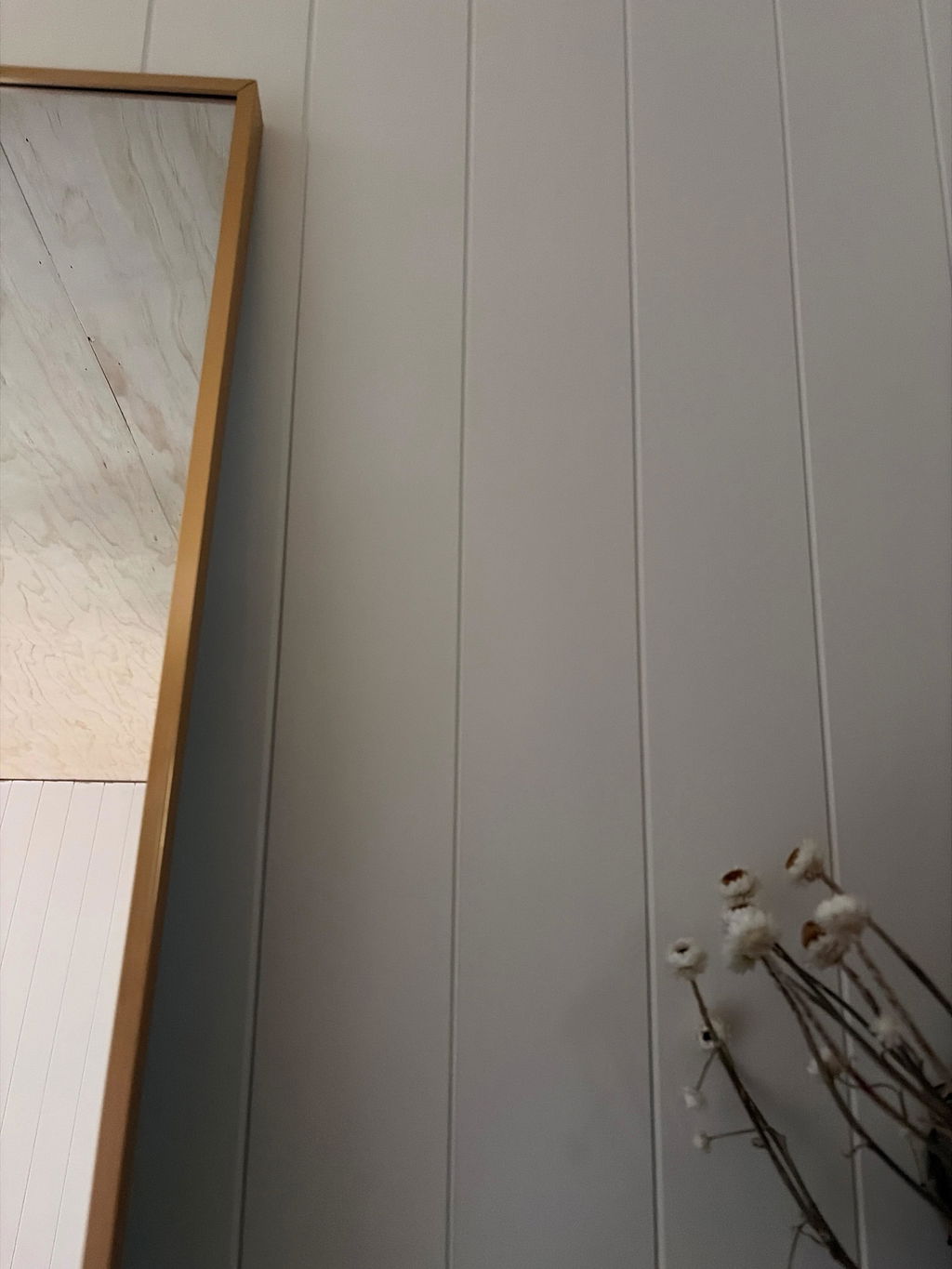
A pleated shade also packs more fabric into the same circumference than a smooth one, so the glow passes through more cloth on its way out. The Aurelia listing puts it plainly: the pleats soften everything that passes through them, and the light comes out warm and indirect. It adds that you will likely catch a faint ribbed pattern on the wall behind the lamp. Each bright face throws slightly more light than the shaded one beside it, so a plain wall close behind the shade picks up soft bands, strongest nearest the shade and fading as they spread.
What a pleat does not do is add light. Brightness comes from the globe; the folds filter and spread it, and the extra cloth softens what comes through, which is why the listing calls the Aurelia an evening-light lamp rather than a task light, not one for detailed work.
A pleated shade adds no light of its own. What it changes is how the globe's light arrives: in folds, a little at a time.

The shade and the arm, in numbers
The shade is a tapered cone of pleated cotton, cream in colour, 34cm across at the bottom rim and 21.5cm tall. On a lamp of 156cm that rim is a little over a fifth of the total height. The pleats run top to bottom around the cone, so from across a room it reads as softly ribbed rather than patterned. Inside sits a single brass E27 lamp holder marked 60W max, and the globe is a separate purchase.
The cone hangs from a small brass joint at its top, and that joint pivots: the shade is not fixed level, it tilts, so the opening can face forward and down toward whatever sits beside it. The listing says the lamp works by tilt rather than distance, and the joint is why.
Then the arm. Instead of a straight pole with the light on top, the Aurelia has a slim brass gooseneck that leaves the top of the pole in a soft curve, rises, and turns down to the shade. The lean is small: about 16cm from pole centre to shade centre. The listing's phrase is that the gooseneck changes the angle, not the address. Our guide to standing, standard and floor lamps sets the gooseneck beside the right-angle arm, the bridge arm and the full arc, with the offset of each.
Floor space comes to roughly 46cm all up, the listed assembled width, with a depth of 34cm, the shade's own rim. The round brass base is 25cm across. Assembled, the lamp weighs 3.7kg and stands 156cm, the shortest in our floor lamp range, which the listing calls comfortable under a standard 2.4m Australian ceiling.
What it is made of, and what it only looks like
The listing's material line reads: pleated fabric shade, brass plated metal frame, wood grain finish pole, weighted brass plated base. Two of those phrases matter. Plated means the brass is a finish over metal, not solid brass; a soft damp cloth is the care routine, and the listing says never to soak or immerse any part of the lamp.
Wood grain finish means the pole is not timber. It is a water-transfer print on a metal pole that reads as timber across the room, as the listing says. We would rather tell you than have you find out, as we say in our guide to mid-century floor lamps, where the Aurelia is the classic of the three.
The only black on the lamp is the cord, the plug and the inline foot switch, which is where every one of our lamps switches; none of them dims. The Aurelia is 240V and double insulated, a plug-in lamp for an ordinary power point. It arrives in one carton, 51.5cm by 39.5cm by 27cm at 5.53kg.
The pleated cone beside the smooth shades
The Aurelia is the only pleated shade in our range; the others are drums, a column, a taper and one open weave. The Marceau hangs a beige linen drum from a right-angle arm, and its listing says linen softens light rather than dropping a hard bright pool of it. The Chandelle stands a tall linen column straight up on its pole and, switched on, lights as a single vertical line rather than a spot. What linen itself does to light, and why the warm end of the globe suits it, belongs to our fabric floor lamp guide.
The pleated cone sits between those smooth shades and the one woven shade in the range. The Rousseau wraps an open paper-rope weave around a white linen drum, and its listing says light escapes through the gaps and lands as a gentle pattern on nearby walls. The Aurelia's pattern comes from a different place. The cotton has no gaps; its bands are made by angles, not holes, so they are fainter, softer-edged and closer to the lamp. If the Rousseau is texture you can see across the room, the pleats are texture you notice when you sit down beside them.
The table puts a floor lamp with a pleated shade beside five with smooth or woven ones. Shade sizes are each listing's figures, diameter at the widest point then height. Width is the listed assembled width; on the Marceau and the Rousseau the listing defines it as the outer edge of the base to the outer edge of the shade.
| Lamp | Shade | Surface | Height / width |
|---|---|---|---|
| Aurelia | Tapered cone, 34cm, 21.5cm tall | Pleated cotton, fine folds | 156cm 46cm |
| Marceau | Drum, 30cm, 18cm tall | Smooth beige linen | 163.5cm 49.3cm |
| Chandelle | Column, 16cm, 40cm tall | Smooth beige linen, faint seams | 166.8cm 20cm |
| Rousseau | Two-layer drum, 32cm outer, about 20cm drop | Open paper-rope weave over linen | 169cm 48.6cm |
| Vienna | Taper, 23 to 30cm, 22.3cm tall | Oatmeal slub linen | 168cm 109cm |
| Flore | Drum, 40cm, 22.5cm tall | Smooth white linen | 195.7cm 99cm |

Where a pleated floor lamp belongs
Close to a seat, first of all. The listing names an armchair in natural linen or velvet, a low timber side table, or the end of a couch, and tells you to pull the lamp in close, because the shade works by tilt rather than distance. The 16cm lean does not carry the light far, so the base wants to sit level with the arm of the chair, not a step behind it, with the cone tilted toward the seat.
The pattern needs a wall. The ribbed bands show on a plain painted surface close behind the shade and vanish on a busy one, so the lamp wants an empty stretch of wall rather than a bookcase behind it. The nearer the cone sits to that wall, the smaller and crisper the bands; pull the lamp a step out and they widen and soften. They are easiest to notice when there is little competing light.
In rooms with dark walls, the listing says, the Aurelia adds softness without visual weight.
The listing calls it ideal for a bedroom or a reading nook where you want the corner lit but not spotlit. Beside a bed, the tilt turns the cone away from the pillow and toward a bedside table; our bedroom floor lamp guide covers the glare question from the pillow. Beside a reading chair it is an evening-chapter lamp, soft light for a novel rather than fine print; the reading floor lamp guide explains where a brighter, more directed lamp takes over. And the wood-grain pole, the listing notes, ties in with timber floors and bedside tables, so it suits a room with oak, wool and cream in it.
The globe, and what shows from below
The cone is open at the bottom, and the pivot tilts that opening toward the seat, so anyone sitting low beside the lamp can see up into it, and what they see is the globe. The product photographs show an opal globe inside the cone, and that is the right instinct: a frosted or opal globe turns the view into a soft disc of light, where a clear filament globe would show its coil as a bright point among the folds. The listing's advice is a warm white LED for the cream fabric, and an LED sits far below the 60W maximum on the holder. Globes are not included. Our E27 globe guide explains the codes on the box, and the warm white guide explains why the warm end of the scale is the one for fabric.
Choose by sentence
If you want the light to arrive softly, in folds, and to leave a faint rhythm on the wall behind the chair, choose the Aurelia. If you want one even field of glow with nothing on the wall, choose a smooth drum: the Marceau beside a sofa, or the Chandelle where there is only 20cm of floor. If you want pattern you can see from the doorway, choose the Rousseau and its weave. The fabric and linen floor lamp collection has all of them, and if you are still deciding what the lamp is for, our guide to choosing a floor lamp starts one step earlier.
A few questions, answered
What is a pleated lamp shade?
A shade whose fabric has been folded into fine, even creases, pressed so they hold, and fixed to the shade's rings so the folds stay in line all the way round. The surface becomes a ring of small angled faces rather than one flat sheet, which is what gives the shade its ribbed look by day and its banded light by night. Cotton and linen pleat well; the Aurelia's cone is cotton, and the folds run top to bottom.
Is a pleated shade brighter than a plain one?
The globe sets the brightness; the shade decides how much of it gets through and where. A pleated shade passes the light through more fabric than a plain drum of the same size, so the same globe reads softer and a little less bright, spread into bands rather than one even field. That is why the Aurelia listing calls it an evening-light lamp, not a task light. For fine print, a brighter, more directed lamp does the job.
Is the Aurelia's pole real timber?
No. The listing describes a wood grain finish, a water-transfer print on metal that reads as timber across the room, and we would rather say so here than have you find out at home. Up close it is a printed metal pole, not grained timber, so match it to your floors and side tables by colour rather than expecting a shared grain. The brass on the arm and base is plated too.
Can the Aurelia's shade be angled without moving the base?
The shade, yes. It hangs from a pivoting joint at its top, so the cone tilts toward or away from the seat with the base left where it is. To send the lean in another direction, move the whole lamp. The listing gives no other adjustment: the lean stays at about 16cm and the height at 156cm, so pick the spot for where the tilted shade will point, not for reach.
Does a pleated floor lamp suit a modern room?
Yes, and it works well as the room's one patterned shade. Pleats read classic, so let them be the soft gesture against plain walls, a smooth sofa and timber. In a room built around a modern black floor lamp, the Aurelia works as the second, softer lamp in a bedroom or beside a reading chair, where its brass and cream warm the palette. If you repeat pleats, leave space between the lamps so each reads on its own.
Do pleated shades collect more dust, and how do I clean one?
The folds give dust somewhere to settle, so a pleated shade wants a light dusting more often than a flat drum. With the lamp off and cool, work a soft brush along the pleats from top to bottom, never across them, which can crush the creases. For marks, the listing's care line is the limit: wipe with a soft damp cloth, and never soak or immerse any part of the lamp. That is our general advice for pleated cotton.